
Review · RIGA
Admission Ticket to Live Silver Museum
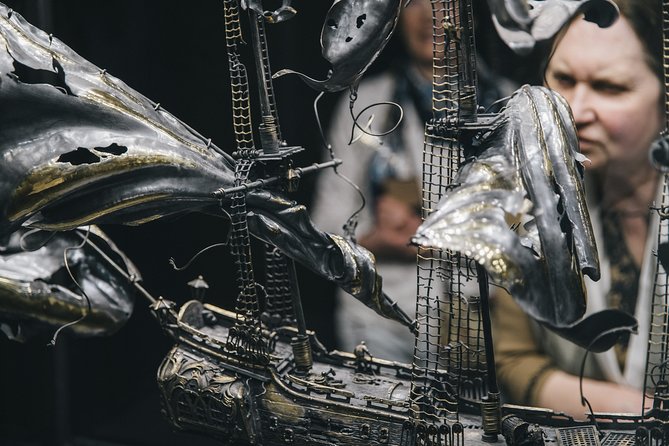
Silver can carry serious ideas. At Live Silver Museum, you see large handmade silver sculptures rather than a room of ordinary jewelry, and each piece comes with a story or meaning behind its creation. I like the unusual subject matter and the chance to examine one-of-a-kind work at close range. I also like the short visit, which fits neatly into a day of sightseeing. The main consideration is location: the address is in Limbaži, not central Riga, so you should check your route before booking.
This is a small, focused museum, not a full-day attraction. That is good news if you enjoy art but do not want to spend hours moving through endless rooms. The collection can be seen in about 30 minutes, while a slower visit with time to think about each sculpture may take close to an hour.
In This Review
- Key points to know before you go
- What makes the Live Silver Museum different
- Entering a collection built around silver
- Large silver works with ideas behind them
- A 30-minute visit or a full hour
- What the English option adds
- Is the $13.10 admission good value?
- Who will enjoy this museum most?
- What the compact setting does well
- Planning your arrival and visit
- How to get the most from the artwork
- Should you book Live Silver Museum?
- FAQ
- Where is the Live Silver Museum located?
- How long does the museum visit take?
- What are the opening hours?
- Is the experience available in English?
- How many people can join the activity?
- Can I cancel for a refund?
Key points to know before you go
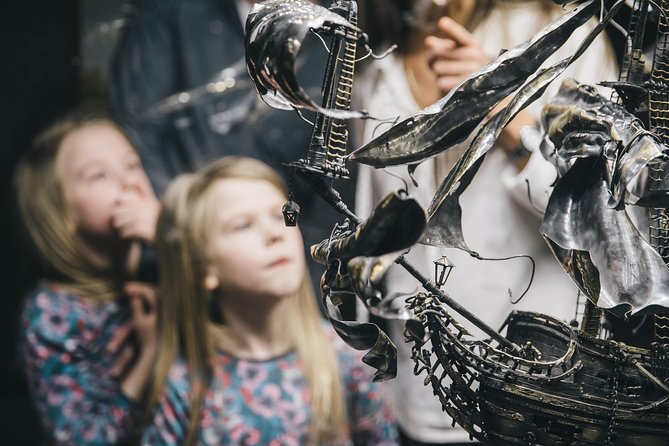
- Large-scale silver sculptures: The collection focuses on striking handmade works, not standard silver souvenirs or small display pieces.
- Meaning behind every work: The experience explains the purpose and ideas connected with each sculpture.
- Short and focused visit: Plan on 30 minutes to one hour, depending on how carefully you study the art.
- English available: The experience is offered in English, which helps you follow the stories behind the pieces.
- Small group size: Admission is limited to a maximum of 20 people, keeping the museum more manageable.
- Advance booking: A mobile ticket lets you arrange entry ahead of time and avoid waiting at the ticket desk.
What makes the Live Silver Museum different
Most silver collections center on coins, tableware, jewelry, or historical objects. This museum takes another path. Its main attraction is a collection of large silver artworks created by hand, with an emphasis on imagination, symbolism, and the ideas behind the finished pieces.
That difference matters. You are not simply checking off another museum of decorative objects. You are being asked to consider how a familiar material can express subjects that are timeless, personal, and sometimes difficult to explain in words.
The works are described as one-of-a-kind creations, and that gives the visit a more personal feel. A handmade sculpture carries traces of the artist’s decisions: the shape, the scale, the level of detail, and the way silver is made to look light, solid, delicate, or powerful.
The collection is small. I see that as one of its strengths, especially if you have limited time. You can look carefully without feeling that you need to rush through a huge building. At the same time, anyone expecting a major museum with dozens of galleries may find the visit too brief.
Other trips worth a look in Riga:
- Riga Old Town walking tour
★ 4.5 · 304 reviews - Latvian food tasting tour at Riga Central market
★ 4.5 · 241 reviews - 2 countries! Hill of Crosses, Rundale Palace and Bauska castle
★ 5.0 · 225 reviews
Entering a collection built around silver
The visit takes place at Live Silver Museum, Burtnieku iela 4, in Limbaži, Latvia. The stated location is important because the experience is often associated with Riga, yet the meeting address is in Limbaži, in Limbaži Municipality. Check the map and your transport plans carefully before setting out.
Once inside, the attraction is straightforward. There is one main museum stop, and admission is included. You can expect to walk through the collection at your own pace while learning about the purpose and meaning of the individual works.
The museum does not appear designed as a long guided circuit with several separate stops. Instead, the value rests in the objects themselves and in the explanations connected with them. That makes this a useful choice for people who like to pause, study details, and form their own reactions.
The maximum group size is 20 people. That is not the same as a private tour, but it is small enough to make the room easier to navigate than a crowded blockbuster exhibition. If you are trying to photograph details or spend time with a particular sculpture, a limited group should help.
Large silver works with ideas behind them
The strongest part of the experience is the artwork’s sense of scale. Silver is often linked with small, polished objects. Here, it is used for substantial sculptures that can command attention as soon as you see them.
The descriptions connected with the collection place strong weight on meaning. You are not only told what a sculpture is made from. You also learn why it was created and what it is meant to express. That extra context gives you a better way into the collection, particularly if a piece looks abstract or symbolic at first glance.
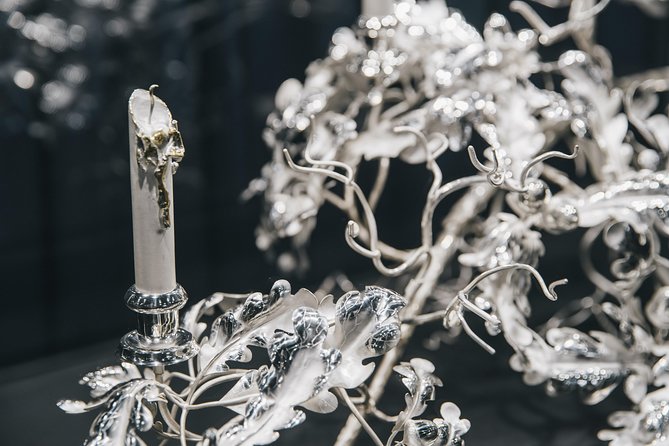
Several works are praised for their fine detail, elegance, realism, and unusual subjects. Some are described as both contemporary and timeless. That combination may be the museum’s most appealing quality. The subjects are not limited to a single period or style, so you might find yourself moving between familiar human ideas and more unexpected artistic interpretations.
The collection also encourages quiet thought. A short visit does not mean a shallow one. You can move quickly through the room, but you can also stop in front of one sculpture and consider the idea it represents. For some people, that reflective quality will be the main reason to come.
This is not an attraction where every object needs to be explained through a long historical timeline. The focus is more direct: look at the piece, understand its purpose, and decide what it suggests to you.
A 30-minute visit or a full hour
The practical time range is 30 minutes to one hour. One visitor completed the entire collection in about 30 minutes, which gives you a useful lower estimate. If you like to inspect details and think about the themes, allow the full hour.
That flexible length makes the museum easy to combine with other plans. You do not need to surrender half a day. You also do not need to feel guilty if you finish quickly. A compact collection can be a welcome change after a large museum where your attention begins to fade before the final room.
The short duration is also the main limitation. If you judge museums by the number of galleries or objects, you may feel that the admission does not buy enough time. The experience works best when you value unusual art and close looking, rather than sheer quantity.
I would set aside at least 30 minutes and avoid arriving with a schedule so tight that you must leave immediately. The artwork’s meaning is part of the point, and it is harder to appreciate that if you are watching the clock.
A completely different kind of day out:
- Discover Riga Bike Tour
★ 5.0 · 166 reviews - From Riga: Hill of Crosses & Jelgava Highlights
★ 5.0 · 149 reviews - Riga Gun Range: shooting with Winchester, Glock17, & Kalashnikov
★ 5.0 · 148 reviews - Best of Riga Walking Tour – Highlights and Hidden Gems
★ 5.0 · 147 reviews
What the English option adds
English is listed as an available language. That is useful here because the meaning behind each sculpture is central to the visit. Without the explanations, the collection could be reduced to a series of attractive silver forms.
The English option should help you follow the stories and ideas connected with the works. No individual guide is named, so you should not book this expecting a particular presenter. The available information confirms English service, but it does not specify the exact format, such as a live guided talk, written material, or another form of explanation.
The safest expectation is that you will receive the information needed to understand the collection in English. If detailed interpretation is especially important to you, it would be sensible to confirm the format with the museum before arrival.
Is the $13.10 admission good value?
The listed price is $13.10 per person. That is a modest admission for a specialty art museum, but value depends on what you want from the stop.
I consider it good value if you enjoy sculpture, craft, unusual museums, or art with a clear symbolic purpose. You are paying for access to a distinctive collection of handmade works, not for a long building packed with objects. The experience offers something difficult to find in a standard city museum: a concentrated look at how silver can be used on a large artistic scale.
The price may feel less attractive if you want a broad survey of Latvian art or a lengthy cultural attraction. This is a narrow subject, and the collection is small. You should choose it because the subject appeals to you, not because you expect a major national museum.
Prebooking adds a practical benefit. You receive a mobile ticket and can arrange admission ahead of time rather than waiting to buy entry at the door. The activity is booked, on average, 33 days in advance, which suggests that advance planning is common. I would still check availability for your own dates instead of assuming a last-minute place will be available.
Who will enjoy this museum most?
I would recommend Live Silver Museum to several kinds of visitors:
- Art lovers who enjoy sculpture, craft, and unusual materials.
- Couples and solo visitors who like a calm stop with room for personal reflection.
- Families looking for a short cultural activity rather than a long museum day.
- Photographers and detail hunters who enjoy handmade surfaces and carefully formed objects.
- Repeat visitors to Latvia seeking something less familiar than the main city sights.
- People with limited time who want a focused attraction lasting less than an hour.
Children may enjoy the scale and unusual forms, though the available information does not describe a dedicated children’s program or interactive displays. Families should consider the child’s interest in looking at art and listening to explanations.
This is less suited to anyone wanting a large collection, a long historical narrative, or a full-day museum visit. It may also be inconvenient if you are staying in Riga and have not planned for the trip to Limbaži.
What the compact setting does well
A small museum can feel personal. You get a clearer sense of the collection as a whole, and you are less likely to lose track of the main idea. Here, that idea is the creative potential of silver and the meaning placed into each sculpture.
The size also helps with pacing. You can scan the room first, then return to pieces that catch your attention. You are not forced to follow a long route or spend equal time on objects that do not interest you.
There is a tradeoff. A compact exhibition can leave you wanting more. The collection may be impressive without being extensive. Think of this as a concentrated artistic experience, not a museum that will occupy an entire afternoon.
The strongest praise centers on the artwork itself. The pieces are described as impressive, elegant, realistic, and unlike anything seen before. The reaction is not simply that the objects are shiny or expensive. The appeal comes from their detail, scale, and the ideas they express.
Planning your arrival and visit
The museum is open daily from 9:00 a.m. to 6:00 p.m., according to the stated schedule. That gives you a broad window for visiting, with both morning and afternoon options.
The activity begins and ends at the museum address. No separate meeting point or transport service is included in the information provided. You should plan your own way to Burtnieku iela 4 and allow enough time to arrive before your chosen entry.
A mobile ticket is provided, so keep the confirmation accessible on your phone. Confirmation is received at the time of booking. Since the experience is limited to 20 people, booking ahead is sensible if your schedule is fixed.
Service animals are allowed, and most people can participate. The information does not provide details about wheelchair access, stairs, seating, or restroom facilities, so contact the museum directly if you need specific accessibility information.
Free cancellation is available if you cancel at least 24 hours before the start time. Cancellations made within 24 hours are not refunded, and changes during that period are not accepted. The cut-off follows local time.
How to get the most from the artwork
Before you begin, give yourself permission not to understand every sculpture immediately. Some pieces may work through symbolism or suggestion rather than a simple subject that can be identified at once.
Read or listen to the explanation connected with each work, then look again. The meaning may change the way you notice the form. A surface that first seems merely decorative may take on a different role once you understand the reason for the sculpture’s creation.
I would also avoid treating the museum as a quick photo stop. Thirty minutes is enough to see everything, but the collection rewards a slower rhythm. Choose one or two works that catch your attention and spend extra time with them.
The silver itself is only part of the attraction. Pay attention to how the material is shaped, how the artist handles fine detail, and how the scale affects your reaction. The museum’s central question is not simply what can be made from silver, but what silver can communicate.
Should you book Live Silver Museum?
Book it if you want a short, distinctive art experience centered on handmade silver sculpture and ideas with lasting meaning. The $13.10 price is reasonable for a specialty collection, especially if you appreciate careful craftsmanship and prefer a focused museum to a sprawling one.
Think twice if you are based in central Riga and want an attraction that is easy to reach on foot, since the stated address is in Limbaži. Also skip it if your ideal museum visit requires many rooms, extensive historical displays, or several hours of material.
For the right visitor, this is a memorable stop because it offers something specific. You see silver used in ways that go well beyond jewelry and decoration, and you leave with a clearer sense of the artist’s imagination behind each piece.
FAQ
Where is the Live Silver Museum located?
The museum is at Burtnieku iela 4, Limbaži, Limbaži Municipality, LV-4001, Latvia.
How long does the museum visit take?
The visit takes approximately 30 minutes to one hour. A quick look through the collection may take about 30 minutes, while a slower visit can last close to an hour.
What are the opening hours?
The stated opening hours are Monday through Sunday, 9:00 a.m. to 6:00 p.m.
Is the experience available in English?
Yes. The experience is offered in English.
How many people can join the activity?
The activity has a maximum group size of 20 people.
Can I cancel for a refund?
Yes. You can receive a full refund if you cancel at least 24 hours before the experience start time. Cancellations or changes made less than 24 hours before the start time are not accepted, and the amount paid is not refunded.
Just added in Riga
- Ultimate Art Nouveau Experience in Riga – Private Tour★ 5.0 · 4 reviews
- Vilnius Day Trip or Airport Transfer★ 5.0 · 2 reviews
- Private Transfer to anywhere in Riga Center★ 5.0 · 2 reviews
- Tour from Riga to Vilnius: Bauska Castle, Rundale Palace and The Hill of Crosses★ 5.0 · 3 reviews
- Tiffany Technique Workshop★ 5.0 · 1 review
- Sea Resort Jurmala near Riga Private Tour★ 5.0 · 1 review
- Explore the Instaworthy Spots of Riga with a Local★ 5.0 · 1 review
- The tour of Riga – one step outside the Old Town★ 5.0 · 1 review