
Review · RIGA
Discover Riga’s most Photogenic Spots with a Local
Riga rewards a good eye. This 90-minute walk links the city’s best-known views with local context, moving from Roland’s Statue through medieval streets, riverside sights, and the Art Nouveau District before ending at the Latvian National Opera. I especially like the small maximum of eight people and the chance to get personal tips on cafes, bars, and restaurants. The main drawback is the price: at $103.56 per person, it is costly for a short walking tour without entry tickets.
The route gives you plenty to photograph, but it is not only a photo stop circuit. A local host explains the stories behind Riga Castle, its churches, the Three Brothers, Big Christopher, and the golden-domed Orthodox cathedral. Laura, one host named in the feedback, was praised for her friendly manner and for making the walk feel personal. Keep in mind that the route can change with weather, pace, and group interests.
In This Review
- Key points to know before booking
- What this short Riga photo walk is really like
- Roland’s Statue and Riga Castle
- St. Peter’s Church and Riga Cathedral
- Big Christopher beside the river
- The Three Brothers and Riga’s oldest homes
- Riga’s Art Nouveau District
- The golden domes of the Orthodox cathedral
- Ending at the Latvian National Opera
- Is $103.56 good value for 90 minutes?
- Who should book this experience?
- Should you book the Riga photo walk?
- FAQ
- How long does the Riga photo experience last?
- Where does the tour begin?
- Where does the tour end?
- How many people can join the group?
- Is the tour suitable for guests with impaired mobility?
- Are admission tickets included?
- Can the itinerary change?
- What is the cancellation policy?
Key points to know before booking
- Laura’s personal touch: One guest especially praised Laura’s friendly guidance and her way of turning Riga’s sights into a personal photo journey.
- Eight people maximum: The small group makes it easier to ask questions, pause for pictures, and adjust the pace.
- Eight central sights in 90 minutes: You see major landmarks rather than spending the walk on one museum or monument.
- A route built for photographs: Medieval houses, river views, golden domes, parks, and Art Nouveau facades give you a varied collection of backdrops.
- Useful local advice: Personalized suggestions for bars, cafes, and restaurants add value after the walk ends.
- Good city orientation: Starting at Roland’s Statue and finishing by the National Opera puts you in the center of Riga’s sightseeing zone.
What this short Riga photo walk is really like
This experience is best understood as a fast introduction to central Riga. You are not signing up for a long historical lecture or a museum visit. You are walking between photogenic places while a local points out why they matter and helps you see more than the obvious facade.
The starting point is Roland’s Statue in Rātslaukums, a central square in Riga’s old town. From there, the route moves through a series of landmarks that show how much architectural variety the city packs into a small area. You get medieval church towers, a presidential residence, old homes, Art Nouveau streets, Orthodox domes, and a grand opera house beside parkland and a canal.
At 90 minutes, the pace will be fairly brisk. I would expect short stops for photographs and explanations rather than long periods at each sight. That is useful if you are visiting Riga for a short stay or want to get your bearings early in the trip. It is less suitable if you prefer slow photography, extended interior visits, or detailed architectural study.
The group limit of eight matters here. A large walking group can make a photo stop feel like a queue. With fewer people, you have a better chance to ask about a building, request a short pause, or get a local suggestion that fits your interests. The host can also adjust the walk to the group’s pace, although weather and local conditions may change the exact stops.
Other trips worth a look in Riga:
- Riga Old Town walking tour
★ 4.5 · 304 reviews - Latvian food tasting tour at Riga Central market
★ 4.5 · 241 reviews - 2 countries! Hill of Crosses, Rundale Palace and Bauska castle
★ 5.0 · 225 reviews
Roland’s Statue and Riga Castle
Roland’s Statue is a practical meeting point because it places you in the heart of Riga’s old town. It also gives the walk a clear opening: you begin among historic civic buildings before moving toward religious sites and residential architecture.
One stop focuses on the Gothic-style residence of Latvia’s president. This is Riga Castle, a symbol of national pride and political history. Even if you only view it from outside, it adds a different layer to the walk. You are not looking only at pretty buildings. You are also seeing a place connected to the country’s modern identity.
The value of having a local here is context. A photograph of a formal historic building can be attractive on its own, but a short explanation helps you understand why the site matters. Since the tour is built around local insight, this is a good moment to ask about Latvia’s national history or the role of Riga as the country’s capital.
St. Peter’s Church and Riga Cathedral
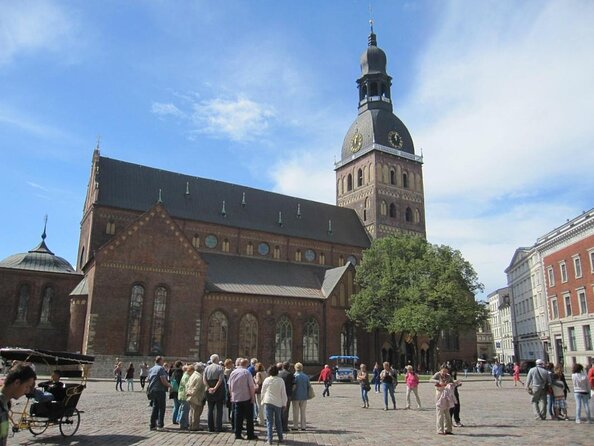
The next church stop brings medieval Riga into view. St. Peter’s Church is a 15th-century church with one of Europe’s tallest steeples. Its height makes it an easy subject for photographs, especially when you frame the tower against the old town.
The church’s appeal is not limited to the exterior. Its scale helps you understand the importance of Riga during the medieval period, when church towers shaped the city’s profile and helped define its center. The description of the stop emphasizes medieval grandeur, so expect the guide to focus on the building’s age, style, and place in Riga’s story.
Riga Cathedral offers a different architectural lesson. It combines Romanesque, Gothic, and Baroque elements, giving you a chance to compare several styles in one setting. For someone interested in buildings, this is one of the more useful stops because you can see how a long history often produces layers rather than one neat design.
You should not count on entry to either church. Tickets for monuments and museums are not included, and the walk is designed around exterior sightseeing. If you want to see inside, check with the host during the tour and be ready to pay separately if admission is available.
Big Christopher beside the river
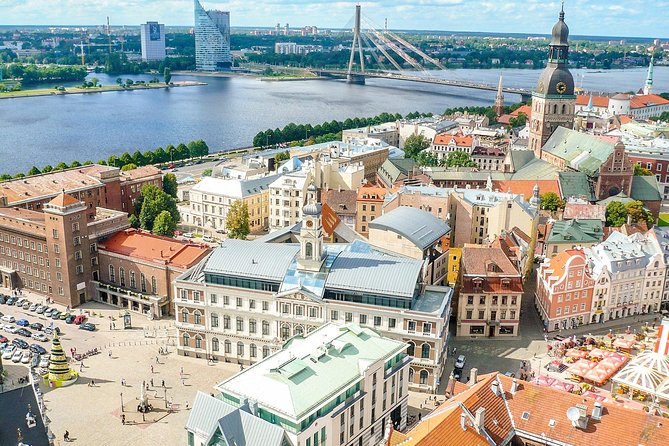
Big Christopher brings a piece of Riga legend to the route. This riverside figure is tied to a traditional story and gives you a chance to photograph the city from a different angle.
The riverside setting matters. After several dense old-town buildings, open water and broader views create a useful change of pace. It is also the kind of place where a local explanation adds real value, since the statue’s story may not be obvious from a quick look.
I like this stop because it gives the photo walk some variety. You are not simply collecting church towers and elaborate facades. You are also seeing a local symbol and a riverside view. If the weather is poor, this may be one of the stops most likely to change, since the route can adapt to conditions.
A completely different kind of day out:
- Discover Riga Bike Tour
★ 5.0 · 166 reviews - From Riga: Hill of Crosses & Jelgava Highlights
★ 5.0 · 149 reviews - Riga Gun Range: shooting with Winchester, Glock17, & Kalashnikov
★ 5.0 · 148 reviews - Best of Riga Walking Tour – Highlights and Hidden Gems
★ 5.0 · 147 reviews
The Three Brothers and Riga’s oldest homes
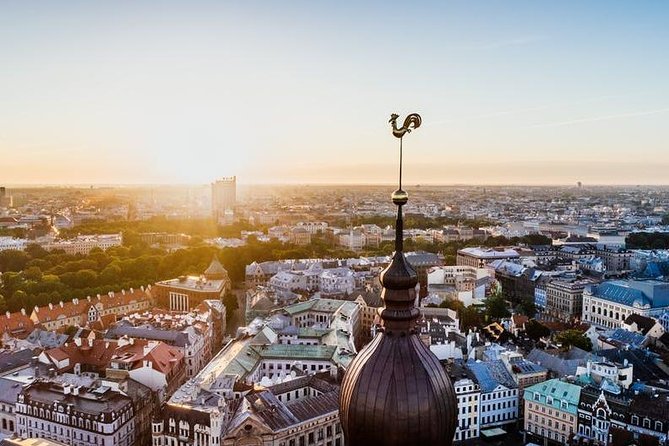
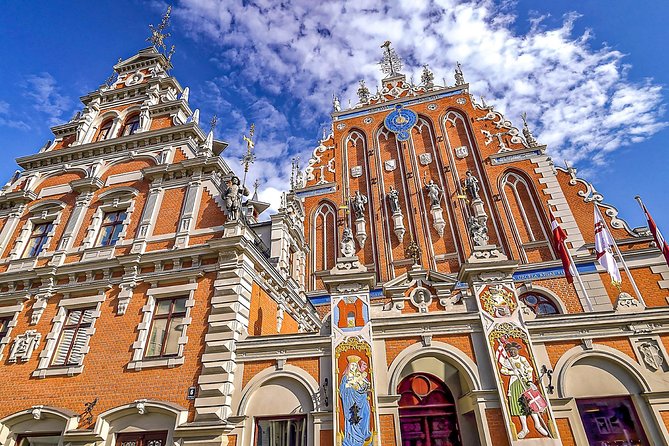
The Three Brothers are among the most recognizable buildings in Riga. This residential complex dates from the 15th century and offers a close look at the city’s oldest domestic architecture.
The houses are especially useful for photographs because they work well as a group. Instead of one isolated facade, you see a set of buildings that show how homes changed over time. Their tight arrangement also makes them a good example of old-town architecture, where narrow streets and compact plots shaped the look of daily life.
This is the sort of stop where a local can help you notice details you might otherwise walk past. Look for the different facade treatments and the way the buildings sit together. You may also want to ask the host for the best angle, since the narrow setting can make composition tricky.
The Three Brothers are a strong reason to bring a phone or camera with enough storage and battery. The tour is designed around pictures, so you will likely want to take more than a few quick snapshots along the way.
Riga’s Art Nouveau District
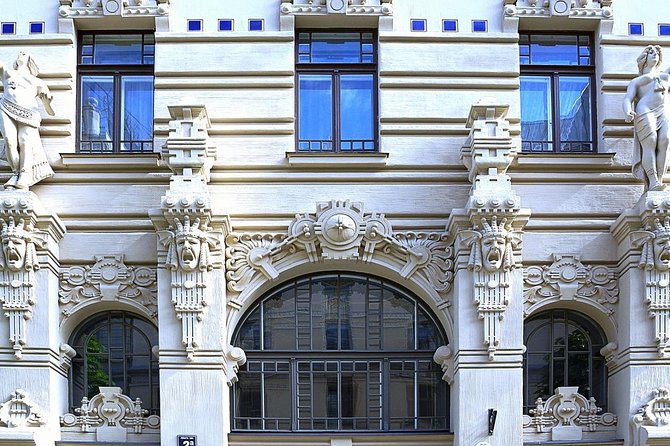
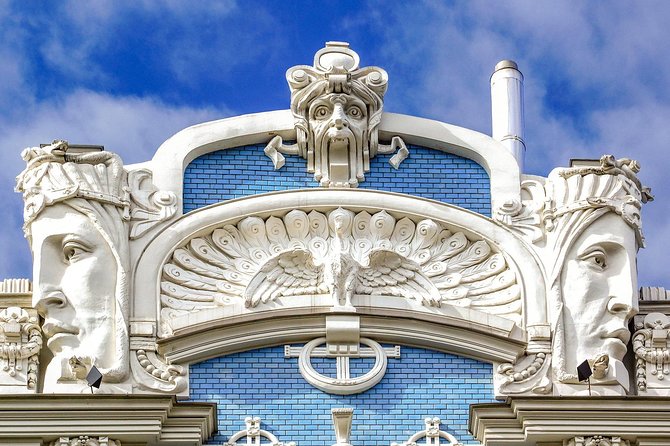
The Art Nouveau District is the visual high point for many visitors. Riga is well known for its Art Nouveau architecture, and this part of the walk shifts from medieval character to more decorative, carefully designed streets.
The appeal comes from the details: ornate facades, sculptural decoration, and a grand sense of design. You do not need to be an architecture expert to enjoy the area. A local can point out features that make one building different from another and explain how the district fits into Riga’s identity.
This stop also shows why the tour is more useful than simply downloading a list of photo locations. You get a person beside you who can explain what you are seeing and suggest which details deserve a closer look. The itinerary description calls the district a journey through architectural splendor, but the practical benefit is simpler: you leave with a better sense of how to read Riga’s buildings.
The Art Nouveau District may deserve more time than the schedule allows. Since the full tour lasts only 90 minutes, you might want to return later if you enjoy architecture or want more careful photographs. The walk gives you an introduction, not an exhaustive tour of the district.
The golden domes of the Orthodox cathedral
The renovated 19th-century Orthodox cathedral provides one of the route’s strongest color contrasts. Its golden domes are visually different from the stone churches and old residential buildings you see earlier.
This stop adds cultural range to the experience. Riga’s architecture reflects more than one religious and political tradition, and the cathedral helps make that clear without requiring a long lecture. The building is also a natural photo subject, especially for anyone who likes symmetry, domes, and bright exterior details.
As with the other monuments, admission is not part of the price. The experience centers on seeing Riga from the outside and learning from the local host. If entering the cathedral matters to you, confirm the options during the walk rather than assuming the tour includes it.
Ending at the Latvian National Opera
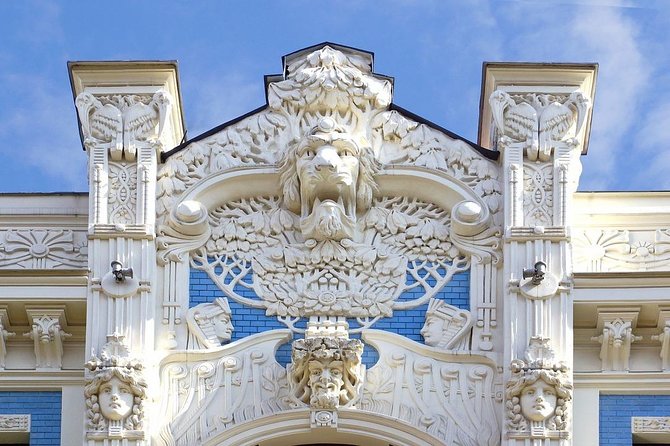
The tour finishes at the Latvian National Opera on Aspazijas Boulevard. The neo-classical building is set beside a park and canal, giving you a calmer final scene after the narrow old-town streets.
This is a smart endpoint. You finish near a major cultural building, public transport, and central Riga attractions rather than at an out-of-the-way meeting point. The opera house also rounds out the architectural story. You have seen medieval churches, old homes, Art Nouveau decoration, Orthodox design, and now a formal neo-classical building.
The park and canal setting should give you some of the easiest final photographs. It is also a convenient place to continue exploring on your own. The host can offer personalized suggestions for food and drinks, which may be one of the most useful parts of the experience if you are new to Riga.
Is $103.56 good value for 90 minutes?
The cost is the biggest question. At $103.56 per person, this is not a budget walking tour. You are paying for a short, small-group experience with a local host, not for admission to attractions or transport.
The price makes more sense if you value personal attention. A group of up to eight allows the host to respond to your interests, explain photo locations, and give restaurant or cafe advice suited to your plans. The local perspective can also save you time during a short Riga visit, especially if you want a quick introduction rather than several hours of formal history.
The value is weaker if your main goal is simply to reach the sights. Riga’s center is walkable, and you can photograph many exterior landmarks without joining a tour. You should book this experience for the interpretation, company, and tailored advice, not because it offers access to places you could not otherwise see.
The single written account available gives Laura particular credit for her friendly approach and personal guidance. That praise is worth noting, but it is also wise to remember that hosts are independent locals, so the style may vary. The small format gives the experience a good chance to feel personal, but it cannot guarantee a particular guide.
Who should book this experience?
I would recommend it to a first-time visitor who wants a quick orientation to Riga’s historic center. It also suits solo visitors who prefer not to walk alone, couples looking for attractive photo locations, and anyone who wants local suggestions for the rest of the trip.
Photography-minded visitors will appreciate the range of subjects. You get towers, old houses, religious buildings, a riverside view, golden domes, and a formal opera house within one short outing. You do not need professional equipment. A phone is enough, though the short schedule means you should be ready to take the picture and keep moving.
This is less suited to anyone with impaired mobility, as the experience involves walking and is specifically not recommended for guests with mobility limitations. Most people can participate, and service animals are allowed, but public transport, museum, and monument tickets are not included.
If you are traveling with a larger party, check the group discount option. The standard format is capped at eight people, so a large family or group may need to confirm how the discount and group arrangement work before paying.
The tour offers free cancellation if you cancel at least 24 hours before the start time. Within 24 hours, you will not receive a refund, and last-minute changes are not accepted. That policy is worth keeping in mind if your Riga schedule may shift.
Should you book the Riga photo walk?
Book it if you want a polished first look at Riga, prefer a small group, and value a friendly local who can explain the city and point you toward good places to eat and drink. Laura’s personal approach received the strongest praise, and the route covers a satisfying range of Riga’s architecture in a short time.
Skip it if $103.56 feels high for 90 minutes, or if you want museum interiors, long historical talks, or slow photography. For the right visitor, this is a useful orientation with strong photo appeal. For everyone else, the city’s central sights can be explored independently at much less cost.
FAQ
How long does the Riga photo experience last?
The experience lasts approximately 1 hour and 30 minutes.
Where does the tour begin?
It begins at Roland’s Statue in Rātslaukums, Riga.
Where does the tour end?
It ends at the Latvian National Opera on Aspazijas Boulevard 3.
How many people can join the group?
The group has a maximum of eight travellers.
Is the tour suitable for guests with impaired mobility?
No. The experience is not recommended for guests with impaired mobility.
Are admission tickets included?
No. Entry tickets for public transportation, museums, and monuments are not included.
Can the itinerary change?
Yes. The route may change with weather conditions, group interests, and walking pace.
What is the cancellation policy?
You receive a full refund if you cancel at least 24 hours before the experience starts. Cancellations or changes made within 24 hours are not accepted for a refund.
Just added in Riga
- Ultimate Art Nouveau Experience in Riga – Private Tour★ 5.0 · 4 reviews
- Vilnius Day Trip or Airport Transfer★ 5.0 · 2 reviews
- Private Transfer to anywhere in Riga Center★ 5.0 · 2 reviews
- Tour from Riga to Vilnius: Bauska Castle, Rundale Palace and The Hill of Crosses★ 5.0 · 3 reviews
- Tiffany Technique Workshop★ 5.0 · 1 review
- The tour of Riga – one step outside the Old Town★ 5.0 · 1 review
- Sea Resort Jurmala near Riga Private Tour★ 5.0 · 1 review
- Explore the Instaworthy Spots of Riga with a Local★ 5.0 · 1 review