
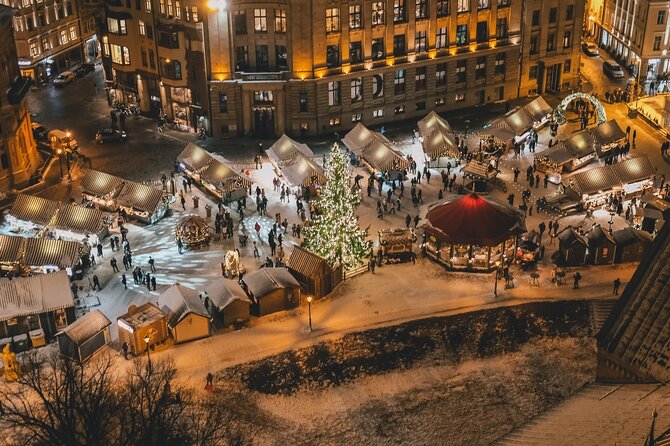
Review · CITY TOURS
Private grand Riga city tour
Riga rewards a closer look. This private tour pairs Old Town walking with a car or minivan ride through the city’s major sights, giving you a useful first look at Riga in about four hours. I like the mix of architecture, markets, churches, and national landmarks. I also like the easy hotel pickup and drop-off, especially if you have limited time.
The main consideration is pace. The tour covers many places, but most stops last only 10 or 20 minutes. Museum entry is not included, and the Latvian National Museum of Art is viewed from outside unless you arrange extra time and admission.
In This Review
- Key points to know before booking
- Why a private four-hour tour works well in Riga
- Art Nouveau Riga, where the tour begins
- Riga Central Market and the city’s daily rhythm
- Entering Old Riga at the House of the Black Heads
- Freedom Monument and Riga’s national story
- The National Museum of Art and the Castle of Light
- Opera House and Academy of Sciences views
- St. Peter’s Church and the medieval center
- Livu Square and the buried river
- Riga Castle and the Three Brothers
- Swedish Gate and Powder Tower
- The guiding style makes the difference
- Is $239.38 per person a fair price?
- Who should book this Riga tour?
- Should you book the Private Grand Riga City Tour?
- FAQ
- How long is the Private Grand Riga City Tour?
- Is hotel pickup included?
- Is the tour private?
- Is transportation included?
- Are museum entrances included?
- Can I cancel for a full refund?
Key points to know before booking
- Private guiding makes the schedule flexible: Your group travels alone, so the guide can adjust the pace, answer questions, arrange a coffee stop, or add a detour.
- Riga’s Art Nouveau district gets an early look: You see one of the city’s defining architectural styles before heading toward the Old Town.
- Central Market adds everyday Riga: The market gives you a glimpse of local shopping and food culture, not just grand buildings.
- The Old Town walk covers major landmarks: St. Peter’s Church, Livu Square, Riga Castle, the Three Brothers, Swedish Gate, and Powder Tower are all included.
- Hotel pickup saves valuable time: Pickup is offered from a centrally located hotel, apartment, or hostel at 10:00 a.m.
- English-speaking guides receive the strongest praise: Erlens is praised for thoughtful answers and fluent English, while Elvis, a guide’s nickname, is described as friendly, fun, and adaptable.
Why a private four-hour tour works well in Riga
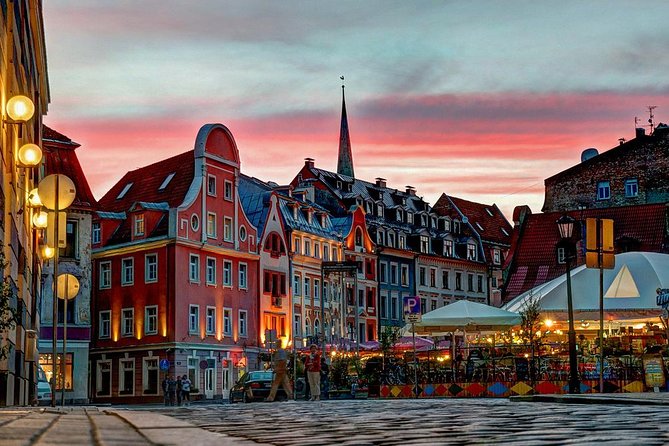
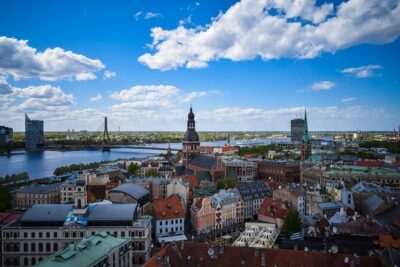
Riga is compact enough to see in half a day, but its story is spread across different parts of the city. Art Nouveau streets sit away from the medieval core. Central Market occupies a separate area near the Daugava River, while the Old Town packs churches, squares, fortifications, and civic buildings into a walkable center.
That makes a private vehicle useful. You do not spend part of your morning figuring out transfers between districts. The air-conditioned car or minivan also gives you a place to rest between walking sections. On-board Wi-Fi and bottled water are included, small comforts that matter during a tight sightseeing schedule.
I would consider this tour a good orientation rather than a museum-heavy cultural program. You see a wide range of Riga, hear the story behind the buildings, and get suggestions for what to do afterward. If you want to enter several museums or spend a long time at the market, you will need to arrange extra time.
The private format is the real advantage. You can ask about Latvian history, architecture, family connections, Jewish heritage, or local districts without waiting for a whole bus group. One guest specifically appreciated a detour focused on Jewish places, while another valued the chance to see the Torņakalns district and share personal knowledge with the guide.
More city tours in Riga:
- Riga Sightseeing Tour by Canal Boat with Audioguide
★ 4.5 · 118 reviews - Best of Latvia, Jurmala, Kemeri N Park, Kuldiga City, Food & More
★ 5.0 · 34 reviews - Private Boat Tour experience in Riga (City Canal and Daugava)
★ 5.0 · 34 reviews
Art Nouveau Riga, where the tour begins
Riga is especially well known for its Art Nouveau architecture, and the tour begins with about 20 minutes devoted to this style. Art Nouveau developed in the late 19th and early 20th centuries, with flowing lines, decorative details, and an interest in making ordinary buildings more artistic.
This opening stop helps you read the city before you reach the medieval center. Instead of seeing decorated facades as random ornament, you can connect them to a period when Riga was growing and modernizing. A guide can point out the features that make this architecture different from the older stone buildings of Old Riga.
Twenty minutes is enough for an introduction and exterior viewing. It is not enough for an extended architectural walk, so tell the guide if this is your main reason for booking. Since the tour is private, you may be able to spend more time here if the rest of your group agrees.
Riga Central Market and the city’s daily rhythm
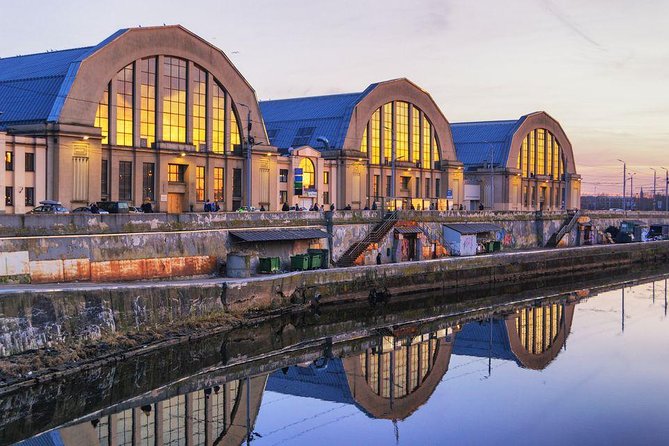
The next stop is Riga Central Market, located a few hundred meters from the Old Town beside the Daugava, the bus terminal, and the central railway station. The market is one of the city’s major public spaces and serves far more than sightseers. An average of 80,000 to 100,000 people shop there each day.
You have about 20 minutes here. That is enough to get a feel for the scale of the place, see local shopping in action, and perhaps note foods or products you want to investigate later. I like this stop because it keeps the tour from becoming a parade of monuments. Riga is not only its churches and formal squares. The market shows the practical side of city life.
The short visit can also be a limitation. You should not expect a leisurely food tour or a full market lunch. Food and drinks are not included, and the scheduled stop is brief. Ask about a coffee or food break if you want more time to sample the market.
Entering Old Riga at the House of the Black Heads
The House of the Black Heads is in the center of Old Riga and receives about 10 minutes on the tour. Its decorative facade and ceremonial character make it one of the Old Town’s most memorable buildings.
The building is connected with the Brotherhood of Blackheads, a historic association of unmarried merchants. You do not need to know every detail to appreciate the visual effect. It is one of those places where the guide’s explanation adds useful context to an impressive exterior.
The stop is mainly a photo and orientation point. Entrance fees to museums are not included, so confirm with the guide if you want to go inside and if the timing allows it.
A completely different kind of day out:
- Riga Old Town walking tour
★ 4.5 · 304 reviews - Latvian food tasting tour at Riga Central market
★ 4.5 · 241 reviews - 2 countries! Hill of Crosses, Rundale Palace and Bauska castle
★ 5.0 · 225 reviews - Discover Riga Bike Tour
★ 5.0 · 166 reviews
Freedom Monument and Riga’s national story
The Freedom Monument is one of Riga’s central landmarks. The 42.7-meter monument is made of granite and copper, and the woman at its top holds three golden stars representing Kurzeme, Vidzeme, and Latgale, Latvia’s historic regions.
This is one of the stops where history and modern national identity meet. The monument symbolizes Latvia’s pursuit of freedom and independence, so it deserves more than a quick photograph. Your guide can help place it within Latvia’s broader story and explain why the three stars matter.
The supplied schedule does not give a precise time for this stop, unlike several Old Town locations. That means the actual explanation may depend on traffic, group interests, and the day’s pace. If national history is important to you, ask for a few extra minutes here.
The National Museum of Art and the Castle of Light
The Latvian National Museum of Art is the country’s main home for works of art. The building reopened in 2016 after modernization, while keeping its grand older appearance.
The tour presents the building as part of the city sightseeing route rather than promising a museum visit. Since museum entrances are not included, you should not assume that admission is part of the price. If you want to see the collections, plan a separate visit or ask if the private schedule can accommodate it.
Across the Daugava, the National Library of Latvia is known as the Castle of Light. Its unusual shape gives Riga a modern architectural counterpoint to its medieval churches and Art Nouveau facades. You view it from the city rather than spending time inside.
These two buildings are useful reminders that Riga’s architecture did not stop developing after the Middle Ages. You get old, restored, and modern design within a short city route.
Opera House and Academy of Sciences views
The Latvian National Opera and Ballet is Riga’s White House. Opened in 1923, it presents opera and ballet productions, along with symphonic and chamber concerts.
The tour includes it as an exterior landmark, giving you a chance to understand its role in Latvian cultural life. It is a quick stop, not a performance visit. No concert ticket is included, and the schedule does not promise entry.
The Latvian Academy of Sciences offers an observation deck on the 17th floor, about 65 meters above the ground. From there, you can see Old Riga and the Daugava River.
This is potentially one of the best views on the route, but you should confirm whether the observation deck visit is part of your actual four-hour plan. The supplied tour details describe the deck as a Riga attraction but do not list an admission fee or guaranteed visit. If the view matters to you, ask before departure.
St. Peter’s Church and the medieval center
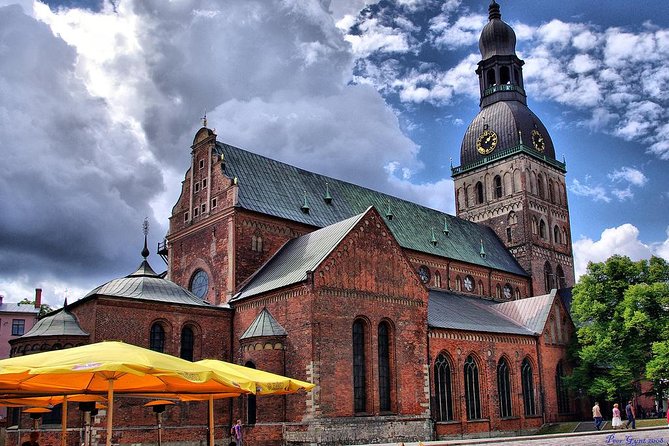
St. Peter’s Church is one of Riga’s defining landmarks. Its tall spire dominates the city center, and the church is an important example of medieval Gothic architecture in the Baltic region.
The scheduled visit lasts about 10 minutes, with admission listed as free for the tour stop. That time is enough to appreciate the exterior and hear the basic story, but not enough for a slow architectural study. If the tower or interior is open and you want more, ask about extending the stop. Any optional museum or tower admission should be confirmed separately.
St. John’s Church follows with another 10-minute stop. It began as a chapel connected with a Dominican monastery in the 13th century. After several rebuilding periods, it took on its present Gothic appearance around 1500.
These churches work well together. St. Peter’s gives you the tall city landmark, while St. John’s offers a smaller, older religious setting. A guide can help you notice how the buildings fit into the tight medieval street pattern.
Livu Square and the buried river
Livu Square has a story that is easy to miss if you only look at its flower beds and surrounding buildings. It occupies the route of an old river, once used to move Latvian grain. The waterway gradually narrowed and disappeared, leaving the public square in its place.
You have about 10 minutes here. I like this stop because it turns an ordinary-looking open space into a lesson in how cities change. Riga’s streets are not simply laid over a fixed plan. Rivers, trade, defense, and commerce shaped the city people see today.
The square is also a natural pause in the walking route. Depending on the group, this may be a good place to ask for a short rest or coffee stop. Coffee breaks and detours can be arranged, but they may affect how long you spend at later landmarks.
Riga Castle and the Three Brothers
Riga Castle has occupied the bank of the Daugava for more than 700 years. Wars, rulers, and major destruction have changed it over time, and it now serves as the residence of Latvia’s president.
The stop gives you a useful look at the political side of Riga. You are not simply seeing another old building. You are seeing a place that still has an official role in the country today.
The Three Brothers are a group of old dwelling houses, with the oldest dating to the 15th century. The complex helps explain how ordinary urban buildings differed from grand churches and public monuments.
This pair of stops gives the walking tour good balance. Riga Castle represents authority and national government. The Three Brothers bring the focus back to domestic life and the compact scale of old streets.
Swedish Gate and Powder Tower
The Swedish Gate is the only surviving gate of the eight that once formed part of Riga’s fortifications. It is easy to pass through without noticing its military purpose, so a guide’s explanation is helpful.
The Powder Tower was another part of the medieval defense system. It was originally called the Sand Tower and once belonged to Riga’s fortified wall.
These are short stops, each about 10 minutes. Together they help you picture Old Riga as a defended city, not just a collection of handsome buildings. You will walk, so wear comfortable shoes as requested by the operator. The route includes several compact streets and repeated stops, making sturdy footwear more useful than polished city shoes.
The guiding style makes the difference
The guide is central to the value of this experience. Erlens receives especially strong praise for fluent English, thoughtful answers, and a style that does not simply repeat a script. He is also described as attentive to questions and willing to explain Latvia beyond the basic landmarks.
Other feedback highlights Elvis, a nickname used by one guide. He is praised for being fun, flexible, and willing to adjust the route to personal interests. Another guest appreciated having time for coffee and rest, while a different group received help with places connected to Jewish heritage.
That flexibility is exactly what you should want from a private tour. Tell the guide early if you have a family connection, a religious interest, mobility limits, or a building you especially want to see. The tour is described as suitable for most people, and service animals are allowed, but walking shoes remain important.
Is $239.38 per person a fair price?
At $239.38 per person, this is not a budget sightseeing option. Its value depends heavily on group size and how much you care about private attention.
For one or two people, the cost is substantial. You are paying for a licensed guide and driver, a private vehicle, hotel pickup and drop-off, bottled water, Wi-Fi, and a route that joins several parts of Riga. For a family or small group, the private format may compare more favorably with several separate taxis, a group excursion, and the cost of arranging a guide.
The price makes the most sense when you have only a few hours, are arriving by cruise or train, or want a clear introduction without handling transport yourself. It is less compelling if you prefer to wander slowly, spend hours inside museums, or explore Riga on foot at your own pace.
The tour is often booked well ahead, with an average booking lead time of 158 days. That suggests planning early, especially if your dates are fixed. Free cancellation is available up to 24 hours before the 10:00 a.m. start time. Changes or cancellations inside that window are not refundable.
Who should book this Riga tour?
I would recommend it most strongly to:
- First-time visitors with only half a day
- Families who want private transport and flexible pacing
- Couples who prefer conversation over a large group format
- People interested in architecture, national history, or Jewish heritage
- Visitors who want hotel pickup and a guided Old Town walk
- Anyone who wants suggestions for independent sightseeing afterward
I would be more cautious if you want a full museum visit, a long food stop, or extended time at every landmark. Ten minutes is enough to introduce a church or tower, not to study it in detail.
Should you book the Private Grand Riga City Tour?
Book it if you want to cover Riga’s major districts efficiently and prefer a guide who can respond to your interests. The combination of Art Nouveau buildings, Central Market, the Daugava, and the Old Town gives you a broader picture than a short medieval-center walk.
The strongest reason to choose it is the personal guiding. Erlens and Elvis are praised for warmth, clear English, flexibility, and attention to individual questions. That matters more than Wi-Fi or bottled water, though those extras make the four-hour ride more comfortable.
Skip it if your main goal is to spend a whole day inside museums or to explore the city slowly without a fixed route. For a first look, a short visit, or a group that values private attention, I find the tour a practical and worthwhile way to get your bearings in Riga.
FAQ
How long is the Private Grand Riga City Tour?
The tour lasts approximately four hours and begins at 10:00 a.m.
Is hotel pickup included?
Yes. Pickup and drop-off are offered at centrally located hotels, apartments, hostels, and similar accommodations in Riga.
Is the tour private?
Yes. Only your group participates in the activity.
Is transportation included?
Yes. Transport is provided in an air-conditioned car or minivan. Wi-Fi on board and bottled water are included.
Are museum entrances included?
No. Museum entrances are not included in the tour price.
Can I cancel for a full refund?
Yes, if you cancel at least 24 hours before the experience start time. Cancellations made less than 24 hours in advance are not refundable.
Just added in Riga
- Ultimate Art Nouveau Experience in Riga – Private Tour★ 5.0 · 4 reviews
- Vilnius Day Trip or Airport Transfer★ 5.0 · 2 reviews
- Private Transfer to anywhere in Riga Center★ 5.0 · 2 reviews
- Tour from Riga to Vilnius: Bauska Castle, Rundale Palace and The Hill of Crosses★ 5.0 · 3 reviews
- Tiffany Technique Workshop★ 5.0 · 1 review
- Sea Resort Jurmala near Riga Private Tour★ 5.0 · 1 review
- Explore the Instaworthy Spots of Riga with a Local★ 5.0 · 1 review
- The tour of Riga – one step outside the Old Town★ 5.0 · 1 review
City Tours, compared.
Riga Sightseeing Tour by Canal Boat with Audioguide
Read our review →
Best of Latvia, Jurmala, Kemeri N Park, Kuldiga City, Food & More
Read our review →
Medieval Experience: Guided Sightseeing and Food Tasting
Read our review →

CITY QUEST RIGA: unlock the mysteries of this city!
Read our review →
Full Day Gauja National Park Ultimate Hiking & Sightseeing Trip
Read our review →Browse the lists this tour appears in