
Review · RIGA
Riga Central Market
Come hungry, and leave curious. Riga Central Market turns a food stop into a compact lesson in Latvian life, with tastings across five pavilions, outdoor stalls, and the modern Central Gastro Market. I especially like the chance to try foods you might skip on your own, such as hemp butter, fried lampreys, sprats, and salted mushrooms. I also like the way guides connect food to long winters, holiday customs, and traditional preservation.
The main drawback is the price: $77.89 per person is a lot for a two-hour market visit, even with food samples included. You are paying for interpretation and access to unfamiliar local tastes, not simply lunch. The private format helps justify the cost if you want personal attention, but budget-minded eaters may prefer to explore the market independently.
Guides Dace and Edgar receive especially warm praise for making the food memorable and explaining Latvian customs clearly. Come with an open mind, and save room for samples of smoked meats, cheese, pastry, fish, vegetables, desserts, beer, and other local products.
In This Review
- At a glance: five pavilions, local tastes, and a private guide
- Entering Riga Central Market through five food halls
- Tasting Latvian food beyond the familiar
- How winter shapes Latvian food
- Outdoor stalls and the practical side of shopping
- A short walk to the Spikeri warehouse district
- The Central Gastro Market adds a modern contrast
- Is $77.89 fair for two hours?
- Who will enjoy this market tour most?
- Practical advice before you go
- Should you book Riga Central Market?
- FAQ
- Where does the Riga Central Market tour begin?
- Where does the tour end?
- How long does the tour last?
- What food areas does the tour visit?
- What foods might I taste?
- Is the tour private?
- Can I cancel for a full refund?
At a glance: five pavilions, local tastes, and a private guide
- Five food pavilions: Move through separate meat, vegetable, dairy, fish, and gastronomy halls, each with its own smells, products, and rhythm.
- Unusual Latvian samples: Try hemp butter, fried lampreys, sprats, rye bread, sauerkraut, kvass, honey, and salted or dried mushrooms.
- Food with a story: Guides explain how Latvian families preserve food for winter and why certain dishes appear at festivals and holidays.
- Outdoor market browsing: Look for Latvian farm produce, plants, flour, clothing, knitwear, amber jewelry, perfume, and souvenirs.
- A modern second act: The Central Gastro Market adds more than 20 food vendors and two bars, with choices ranging from Latvian dishes to ramen and pizza.
- Private, two-hour format: Your group takes part alone, with the tour beginning and ending at Riga Central Market.
Entering Riga Central Market through five food halls
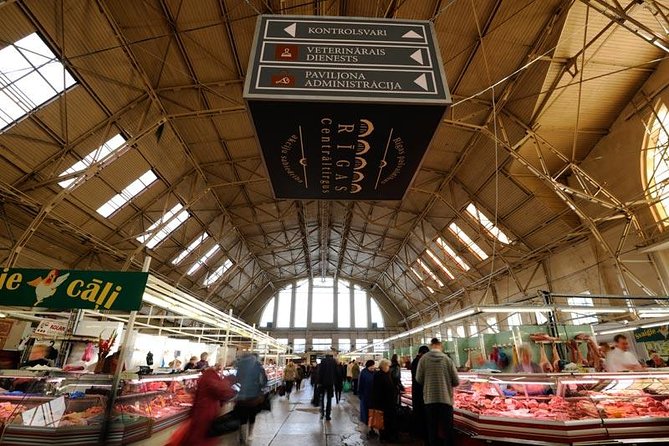
Riga Central Market is not one tidy indoor market. It is a collection of large pavilions, each focused on a different part of the food trade. That arrangement gives the visit a clear shape. You move from meat to vegetables, dairy, fish, and prepared foods instead of wandering without a plan.
I like this setup because it lets you compare the everyday staples of Latvian cooking. The food is not presented as a staged cultural display. You see the products used in ordinary kitchens, along with newer flavors and imported goods. Prices are described as competitive, and some outdoor sellers may allow bargaining.
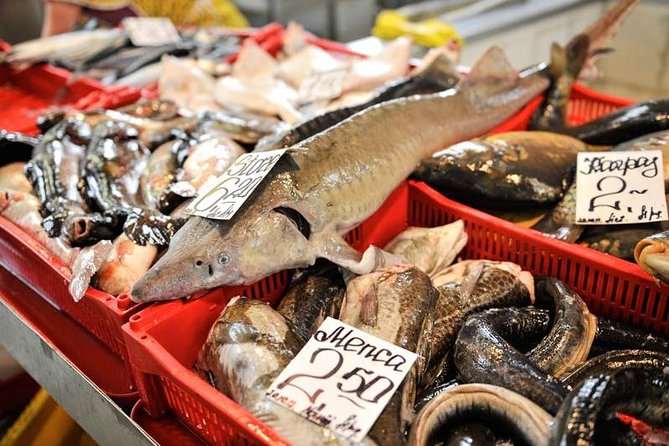
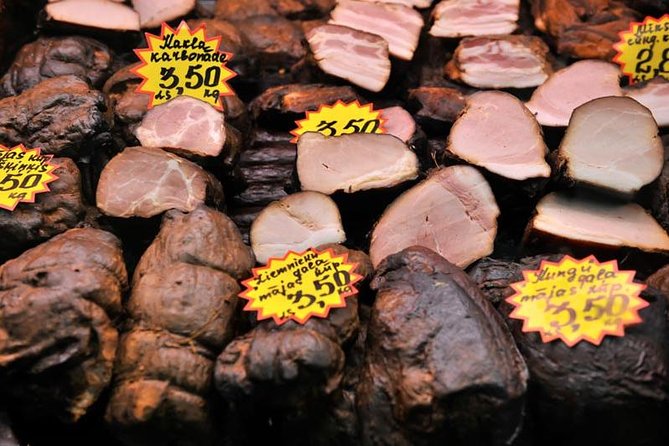
The five pavilions are the heart of the tour. The meat hall may offer smoked products and other preserved foods. The dairy area brings cheese and related items into the conversation. Fish is important here, with sprats and lampreys among the tastes you may encounter. In the vegetable and gastronomy sections, you can see how seasonal produce and prepared foods fit together.
You should expect a working market rather than a quiet museum. Stalls, displays, smells, and conversations compete for your attention. That can be part of the fun, but it may feel crowded or distracting if you prefer a slow, polished tasting room.
Other trips worth a look in Riga:
- Riga Old Town walking tour
★ 4.5 · 304 reviews - Latvian food tasting tour at Riga Central market
★ 4.5 · 241 reviews - 2 countries! Hill of Crosses, Rundale Palace and Bauska castle
★ 5.0 · 225 reviews
Tasting Latvian food beyond the familiar
The tastings are the strongest reason to book with a guide. A first visit alone can show you what is for sale, but it does not always tell you what to choose or how a food fits into local life. The tour gives you a safer way to try unfamiliar items, with someone ready to explain what you are eating.
The food list includes several classic Latvian tastes:
- Hemp butter
- Rye bread
- Fried lampreys
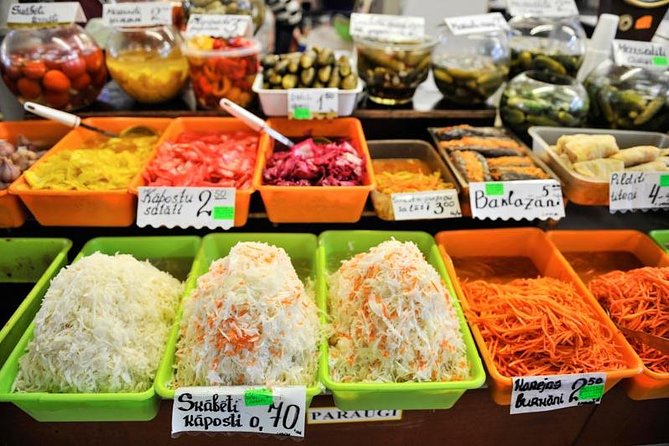
- Sauerkraut
- Kvass
- Honey
- Salted and dried mushrooms
- Sprats
- Beer
Hemp butter is one of the more distinctive samples. It offers a local flavor you are unlikely to find on a standard European market tour. Rye bread is more familiar, but it matters because dark bread is a basic part of food traditions across the region.
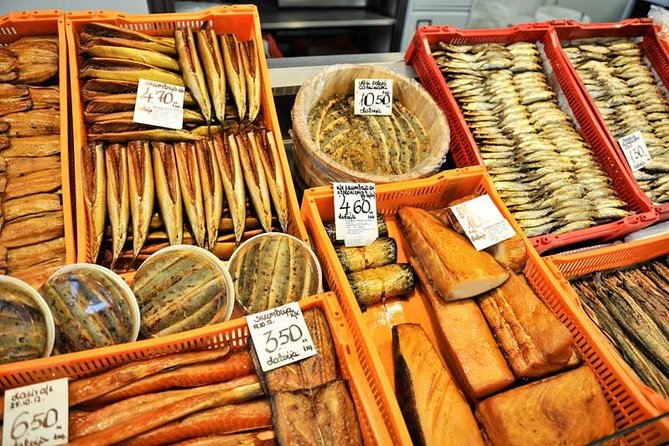
Fried lampreys may test your courage more than honey or bread. Sprats, a small smoked or preserved fish, are another useful introduction to Baltic food habits. If you are comfortable with fish and preserved foods, this part of the tasting should be rewarding. If not, the guide can still help you understand the dish without forcing you to make it your favorite.
Kvass gives you a drink to balance the savory samples. It is made from bread and is part of the region’s traditional beverage culture. Beer is also included in the broader food-and-drink experience, with a particularly positive mention of beer at Labietis. The supplied information does not guarantee that every tour uses the same tasting stop, so treat that detail as a possible highlight rather than a promise.
One of the best details from the tour feedback is that Dace sometimes notices which dessert a guest likes most and buys an additional portion for the hotel. That is a small gesture, but it shows how a private format can feel more personal than a large group food walk.
How winter shapes Latvian food
The market becomes more meaningful when you understand the climate behind the food. Latvia has long, cold winters, and the tour explains how families preserve ingredients for the months when fresh local produce is limited.
Salted and dried mushrooms, sauerkraut, smoked meat, fish, and other preserved foods are not simply curiosities. They reflect practical household habits developed around seasonal change. You also learn how particular foods appear at holidays and festivals, which helps connect a market purchase with family customs.
This cultural layer is where the tour earns more than a simple tasting fee. You are not just sampling a salty fish or a fermented drink. You are seeing why preservation matters and how food helps mark the calendar.
Edgar is praised for explaining Latvian cuisine, customs, and holiday foods in a way that keeps the market visit easy to follow. Dace receives similar praise for introducing traditional foods that many people would not have chosen alone. If you want context rather than a list of samples, the guide is the main value.
The tour is offered in English. One supplied account also describes a German-language tour with useful information about the market, Latvian life, and local food preferences, but you should confirm the language available when booking if English is not your first choice.
Outdoor stalls and the practical side of shopping
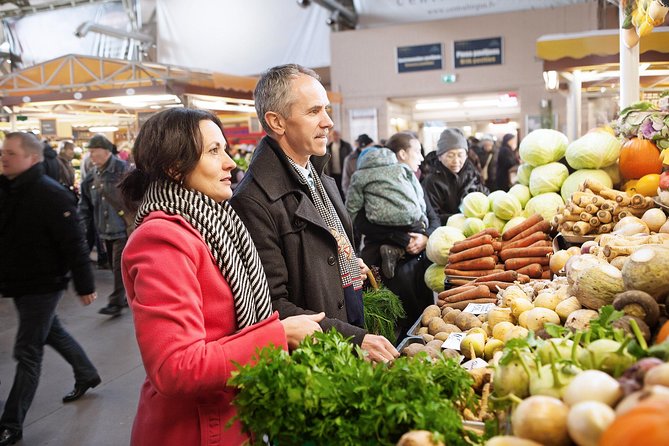
After the indoor pavilions, the outdoor area changes the mood. Here you find stalls selling fruit, vegetables, garden plants, and flour. The produce may come from Latvian farms or nearby countries, giving you a quick sense of what is grown locally and what reaches Riga through regional trade.
I would pay attention to the prices and the presentation. This is where the market feels most useful for daily shopping, rather than designed for sightseeing. You may see stacks of produce, seasonal goods, and sellers focused on local customers.
The outdoor area also includes small kiosks with souvenirs, clothing, perfume, knitwear, amber jewelry, and other goods. These stalls can be handy if you want a small Latvian purchase, but they are not the main reason to pay for the tour. You can browse them as an extra, not as a central part of the tasting.
Bargaining is mentioned as a possibility, especially for fresh goods. Do not assume every seller will negotiate. Treat it politely, and compare prices before buying a large amount.
The outdoor section also makes clear that Riga Central Market is more than a food attraction. It is a place where food, household shopping, gifts, and seasonal goods meet. That broader view helps explain why the market remains important to the city.
A completely different kind of day out:
- Discover Riga Bike Tour
★ 5.0 · 166 reviews - From Riga: Hill of Crosses & Jelgava Highlights
★ 5.0 · 149 reviews - Riga Gun Range: shooting with Winchester, Glock17, & Kalashnikov
★ 5.0 · 148 reviews - Best of Riga Walking Tour – Highlights and Hidden Gems
★ 5.0 · 147 reviews
A short walk to the Spikeri warehouse district
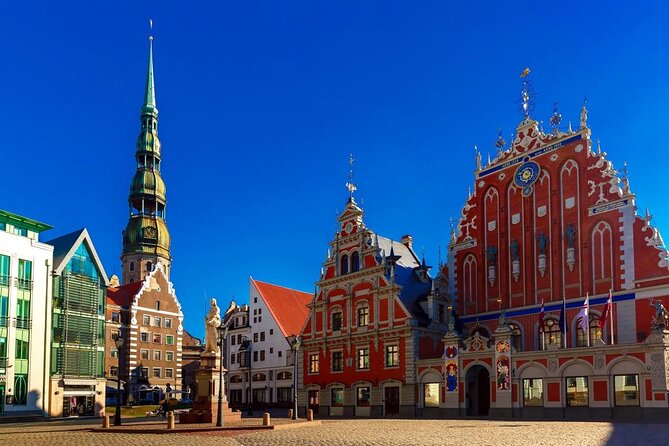
A few minutes from the market, you can find Spikeri, a historic warehouse district. Only 13 of its original warehouses survive today, so the area provides a useful architectural footnote to the market visit.
The tour information does not promise a long guided walk through Spikeri, and the main activity remains inside and around the market. Still, the nearby warehouses give you a natural extension if you want to continue exploring after the two-hour tour.
This is a good place to add your own time. The market tour ends back at the starting point, so you can decide whether to leave for another Riga sight or continue toward Spikeri. I would not book this activity only for the warehouse district, but I would use its location to build a larger morning or afternoon plan.
The Central Gastro Market adds a modern contrast
The Central Gastro Market is the newest-feeling part of the visit. It brings together more than 20 caterers and two bars, with food choices that range from local Latvian dishes to burgers, pizza, ramen, Thai food, and other international options.
This section matters because it shows how Riga’s food scene is changing. The traditional pavilions focus on ingredients, vendors, and everyday shopping. The gastro area focuses on ready-to-eat meals and a more contemporary social setting.
I like having both parts in one visit. You can learn about sauerkraut and rye bread, then see how a modern food hall handles pizza or ramen. It also makes the tour easier for mixed groups. Someone who is unsure about lampreys or sprats can still find a familiar meal.
The drawback is that the gastro section may feel less distinctly Latvian. If your goal is only traditional food, spend your attention on the five main pavilions and treat this area as an optional contrast. If you are traveling with a group that has different tastes, it may be one of the most practical parts of the market.
Is $77.89 fair for two hours?
At $77.89 per person, this is not a cheap way to buy lunch. The ticket includes food samples, but the real product is the private guide, the cultural explanation, and the confidence to try foods you might otherwise pass by.
The value improves if you are curious about Latvian food and would like a personal introduction. You may taste smoked meats, cheese, pastries, fish, vegetables, desserts, and drinks in addition to the named specialties. You also gain a better understanding of winter preservation and holiday traditions.
The value is weaker if you only want fresh produce or a casual market wander. You can visit the market without a tour, browse the stalls, and spend far less on individual purchases. The tour is best seen as a guided cultural tasting, not a bargain meal.
A private activity also changes the calculation. Only your group takes part, which gives you a better chance to ask questions and tell the guide about your interests. It may suit a couple, family, or small group that values flexibility. It is less attractive for someone who prefers meeting other people on a shared food walk.
Group discounts may be available, so check the final price for your party. Confirmation is sent within 48 hours, subject to availability. The listed schedule is Monday through Friday, from 11:00 a.m. to 6:00 p.m., and the activity is available near public transportation.
Who will enjoy this market tour most?
I would recommend it to first-time visitors who want a quick, guided introduction to Latvian food. It also suits people who enjoy trying preserved foods, fish, dark bread, fermented drinks, and regional specialties.
Families and mixed groups may appreciate the range of options. One person can taste hemp butter or lampreys while another chooses pastry, cheese, vegetables, or a dish from the gastro hall. Most people can participate, according to the provided activity details.
Food-focused visitors will get the most from the explanations of farming, preservation, and holiday customs. The tour also suits anyone who feels unsure about ordering unfamiliar food alone. Dace and Edgar are praised for making those choices easier and more enjoyable.
I would think twice if you have only a short stop in Riga and want a list of major landmarks. This is a focused food visit, not a city sightseeing tour. I would also consider the cost carefully if you are happy to browse markets independently.
Practical advice before you go
Arrive ready to eat, but do not fill up beforehand. The samples can cover a wide range of foods and drinks, and one direct piece of advice from the tour feedback is simple: come hungry.
Keep your schedule flexible after the tour. Since it ends at Riga Central Market, you can continue shopping, walk toward Spikeri, or use public transportation for the next part of your day.
Wear something comfortable for standing and walking through the pavilions. The supplied information confirms that the market is near public transportation, but it does not specify a particular route or entrance, so check the exact meeting details before setting out.
If you have dietary restrictions, ask about them when booking or before the tasting begins. The available information does not list substitutions, allergy handling, or a set menu, so you should not assume every sample can be adjusted.
Free cancellation is available if you cancel at least 24 hours before the start time. Changes or cancellations made inside that window are not accepted for a refund.
Should you book Riga Central Market?
Book this tour if you want Latvian food explained as part of Latvian life. The combination of five pavilions, unusual samples, winter food traditions, a private guide, and the nearby Spikeri district gives you more than an ordinary market stroll.
I especially like it for curious eaters who want to try sprats, hemp butter, lampreys, kvass, and preserved foods without guessing what to buy. Dace and Edgar add a personal touch, and the private format is useful for questions and different appetites.
Skip it if $77.89 feels too high for two hours or if you mainly want to shop for produce. In that case, visit the market on your own and spend your money at the stalls. For everyone else, this is a focused and flavorful way to understand Riga through the food on its tables.
FAQ
Where does the Riga Central Market tour begin?
The tour begins at Riga Central Market, Rīgas Centrāltirgus, Latgales priekšpilsēta, Rīga, LV-1050, Latvia.
Where does the tour end?
The activity ends back at the meeting point at Riga Central Market.
How long does the tour last?
The tour lasts approximately two hours.
What food areas does the tour visit?
The market has five food pavilions covering meat, vegetables, dairy, fish, and gastronomy products. The experience also includes the outdoor area and the Central Gastro Market.
What foods might I taste?
Possible tastes include hemp butter, rye bread, fried lampreys, sauerkraut, kvass, honey, salted and dried mushrooms, sprats, beer, smoked meats, cheese, pastry, vegetables, and desserts.
Is the tour private?
Yes. Only your group participates in this private activity.
Can I cancel for a full refund?
Yes, if you cancel at least 24 hours before the experience start time. Cancellations made less than 24 hours before the start are not refunded.
Just added in Riga
- Ultimate Art Nouveau Experience in Riga – Private Tour★ 5.0 · 4 reviews
- Vilnius Day Trip or Airport Transfer★ 5.0 · 2 reviews
- Private Transfer to anywhere in Riga Center★ 5.0 · 2 reviews
- Tour from Riga to Vilnius: Bauska Castle, Rundale Palace and The Hill of Crosses★ 5.0 · 3 reviews
- Tiffany Technique Workshop★ 5.0 · 1 review
- Sea Resort Jurmala near Riga Private Tour★ 5.0 · 1 review
- Explore the Instaworthy Spots of Riga with a Local★ 5.0 · 1 review
- The tour of Riga – one step outside the Old Town★ 5.0 · 1 review