
Review · GAUJA NATIONAL PARK SIGULDA AND TURAIDA
Group Tour: Sigulda and Turaida from Riga.
Castles, cliffs, and one legendary cave make this day special. This six to seven-hour outing takes you from Riga into Gauja National Park, where you can see medieval ruins, a working cultural site, and broad views over the Gauja River valley. I especially like the mix of medieval monuments and Latvian folklore, plus the chance to visit both Sigulda and Turaida without arranging several separate trips.
The tour also includes private transportation, museum entry, and a small maximum group of 17 people. Guide Maria receives especially warm praise for keeping the day engaging and showing both Sigulda and Turaida thoroughly. The main drawback is the pace: with several stops packed into one day, you will need to keep moving, and food and drinks are not included in the $139 price.
In This Review
- Key points to know before booking
- Why this day trip works from Riga
- Emperor’s Chair and the Gauja Valley views
- A glimpse of Sigulda’s high-speed track
- Sigulda’s Livonian Order Castle ruins
- Sigulda New Castle and its changing identity
- Gutmanis Cave and the Rose of Turaida
- Turaida Castle and the story of medieval Livonia
- The 1750 wooden church and local life
- Food, timing, and the practical side of the day
- Who will get the most from this tour
- Should you book the Sigulda and Turaida tour?
- FAQ
- How long does the Sigulda and Turaida tour last?
- Where does the tour start?
- Where does the tour end?
- What is included in the price?
- Are food and drinks included?
- How many people can join the group?
- Can I cancel for a full refund?
Key points to know before booking
- The Gauja Valley views are a major highlight: The Emperor’s Chair and Emperor’s Viewpoints look toward the river valley and Turaida Castle.
- You visit two very different castles: Sigulda offers atmospheric ruins, while Turaida presents a restored medieval complex with exhibitions and a tower view.
- Gutmanis Cave comes with a famous legend: Inscriptions from the 17th century cover its walls, and local folklore links the cave to the Rose of Turaida.
- The group is capped at 17 people: That is small enough to make guided sightseeing more manageable than a large coach excursion.
- Entry fees are covered: Museum admissions and taxes are included, while meals and drinks are extra.
- You return to central Riga: The day starts at 9:00 a.m. at Herdera laukums 6 and ends back at the same meeting point.
Why this day trip works from Riga
Sigulda lies close enough to Riga for a full excursion without an overnight stay. That makes this tour useful if you want to see Latvia beyond the capital but have limited time in the country. You get a countryside setting, medieval sites, natural scenery, and local stories in one organized day.
I like the balance here. This is not only a castle tour. You will also see the Gauja River valley from above, pass the Sigulda bobsleigh and luge track, visit a wooden church built in 1750, and hear the story connected with Gutmanis Cave. The result feels more varied than a simple museum outing.
The schedule lasts about six to seven hours. That is long enough to make the drive from Riga worthwhile, but short enough to fit comfortably into a broader Riga stay. The group limit of 17 is another practical advantage. You are not guaranteed a tiny party, but you are unlikely to be part of a huge sightseeing crowd.
The price is $139. I consider that reasonable if you value door-to-door transport, a guide, and entry to the main museums. It is less attractive if you prefer to travel slowly, choose your own restaurants, or spend a full day at only one castle. Since food is not included, keep room in your budget for lunch and drinks.
More of the Gauja valley and Sigulda:
- Private Full-Day Trip to Turaida, Sigulda, and Cesis
★ 4.5 · 52 reviews - Full-Day Private Trip to Cesis, Sigulda and Turaida from Riga
★ 4.5 · 42 reviews - From Riga: Sigulda & Turaida Legends Group Tour
★ 5.0 · 41 reviews
Emperor’s Chair and the Gauja Valley views
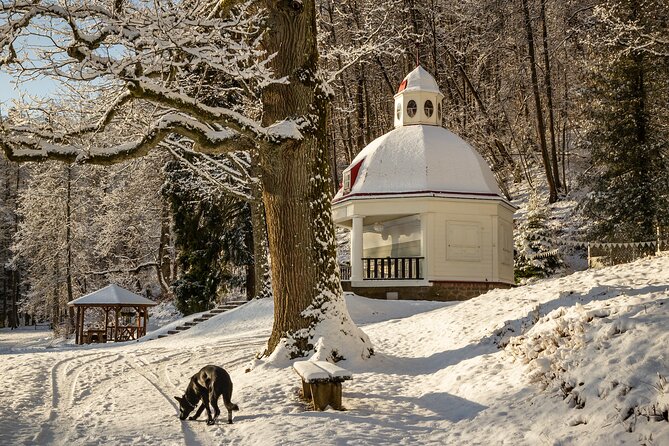
The first listed stop is Keizarkresls un keizarskats, usually translated as the Emperor’s Chair and Emperor’s Viewpoints. These overlooks were prepared for Tsar Alexander II’s visit to Sigulda in the second half of the 19th century.
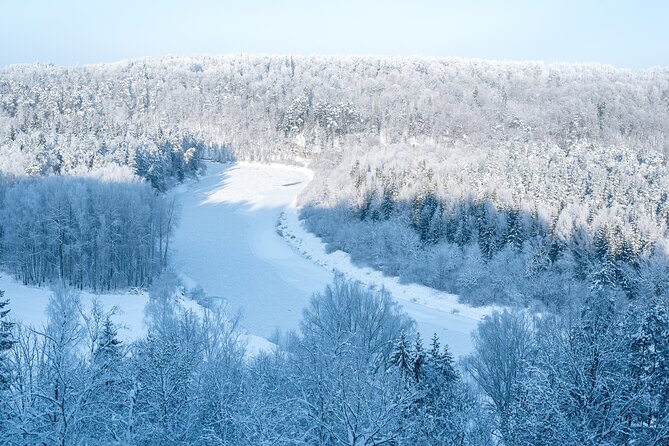
The appeal is immediate. From the high Beite cliffs, you can look across the Gauja River valley toward Turaida Castle. This gives you a useful sense of the area before you begin touring its buildings. The castle is not just an isolated monument on a ticketed site. It is part of a larger setting of river, wooded slopes, cliffs, and open views.
You get about 25 minutes here, with no admission charge. That is enough for photographs and a quick orientation, though not enough for a long walk or extended quiet time. Wear shoes that feel secure, since viewpoints and cliff areas can involve uneven ground.
This is one of the most valuable short stops because it connects the entire day. Later, when you climb Turaida Castle’s main tower, you will recognize the valley from a different angle.
A glimpse of Sigulda’s high-speed track
The Sigulda Bobsleigh and Luge Track adds a modern sporting note to a day otherwise focused on old castles and folklore. The facility is one of 18 such tracks worldwide and hosts international competitions as well as training.
The track stretches 1,420 meters, with 16 curves and a 200-meter braking section. Speeds can reach 125 kilometers per hour. It is designed for bobsleigh, luge, and skeleton, so you are seeing a serious competition venue rather than a decorative tourist attraction.
The available schedule lists the track as a stop but does not give a separate visit length or confirm a ride. You should therefore treat it as a sightseeing stop, not assume that a high-speed descent is included. That distinction matters if the track is one of your main reasons for booking.
Even a short look can add context to Sigulda. The town is not only about medieval ruins and romantic views. It also has a strong connection with winter sport and international competition.
Sigulda’s Livonian Order Castle ruins
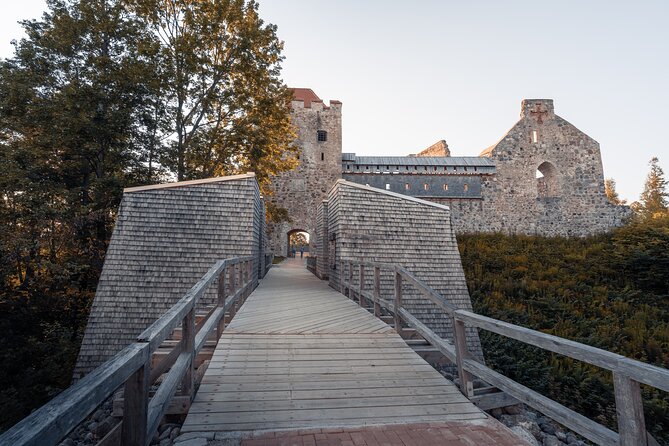
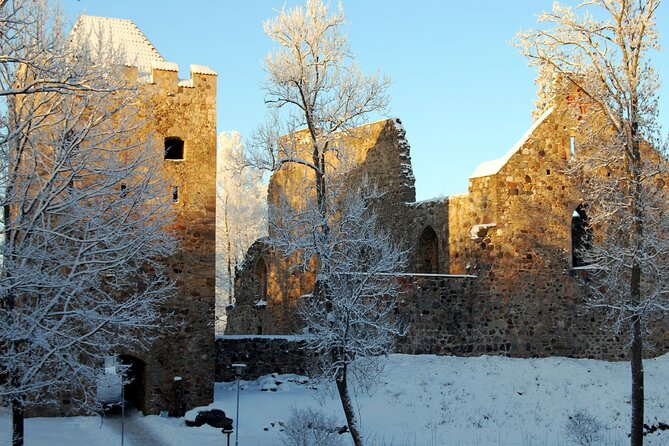
The Livonian Order Castle of Sigulda dates to 1207. It began as a Castella-type fortress and was later rebuilt into a convent-type castle. Today, the ruins offer a more open and atmospheric experience than a fully restored palace.
You have about an hour here, and admission is included. The northern and main gate towers can be climbed, giving you a physical sense of how the castle was built and defended. I prefer this kind of site to a perfectly rebuilt structure because the broken walls let you see the passage of time.
The central area now serves as an open-air stage. Concerts and festivals take place here, including the International Sigulda Opera Music Festival. That modern use keeps the ruins connected to local life instead of treating them as a frozen exhibit.
The tradeoff is that ruins require imagination. You will not find every medieval room intact or furnished. Your guide’s stories matter here, and guide Maria has been praised for explaining each place with facts, stories, and legends rather than simply pointing out walls.
One hour should give you time for the main towers and the central grounds. If you want to read every sign or linger over every stone, the schedule may feel brisk.
A completely different kind of day out:
- Riga Old Town walking tour
★ 4.5 · 304 reviews - Latvian food tasting tour at Riga Central market
★ 4.5 · 241 reviews - 2 countries! Hill of Crosses, Rundale Palace and Bauska castle
★ 5.0 · 225 reviews - Discover Riga Bike Tour
★ 5.0 · 166 reviews
Sigulda New Castle and its changing identity
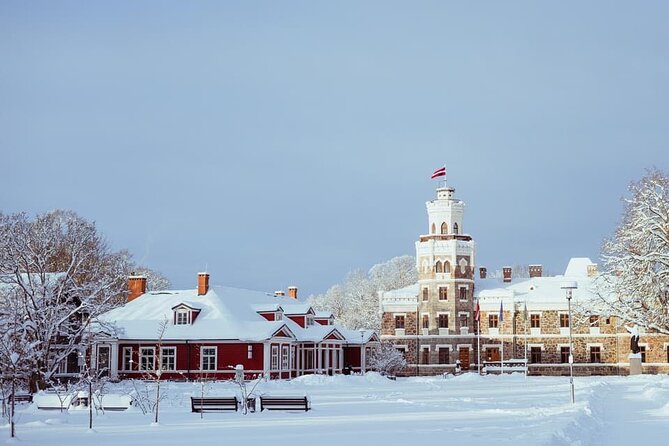
Sigulda New Castle offers a sharp contrast to the medieval fortress. The Knyaz Kropotkin family built it in 1878, and its exterior retains a neo-Gothic style. The building’s later story is just as interesting: in 1937, the interior became associated with national romanticism when it housed the Latvian Union of Writers and Journalists.
You have roughly 20 minutes here, with no separate admission charge. That is a short visit, so expect an exterior look and a concise introduction rather than a full, leisurely tour of every room.
The site now houses workshops and salons for craftspeople and artists. You may find opportunities to see local skills being practiced or buy souvenirs connected with Latvian makers. This gives the castle a more active role than a standard historic house.
For me, the value of this stop comes from the contrast. Sigulda’s earlier castle reflects military power and medieval orders. The New Castle points toward the 19th and 20th centuries, when estates, writers, artists, and national culture shaped the area.
Gutmanis Cave and the Rose of Turaida
Gutmanis Cave is one of the day’s most unusual stops. It is described as the largest cave in the Baltic countries and the deepest internal erosion cave in the region, measuring 19 meters deep, 12 meters wide, and 10 meters high.
You get about 30 minutes here, and admission is free. The walls carry inscriptions dating to the 17th century, making the cave both a natural formation and a record of past visitors. Look closely, but do not expect a vast underground system. The dimensions are impressive in regional terms, yet this is a compact cave that you can see fairly quickly.
The strongest part of the stop is the story. Gutmanis Cave is linked with the legend of the Rose of Turaida, one of Latvia’s best-known romantic tales. Your guide can connect the cave to Turaida Castle and help turn a short natural stop into part of the wider story of the area.
The cave may be less appealing if you expect a dramatic spelunking experience. You will not be on a long underground expedition. Instead, you are seeing a famous local landmark with inscriptions, geology, and folklore in one place.
Turaida Castle and the story of medieval Livonia
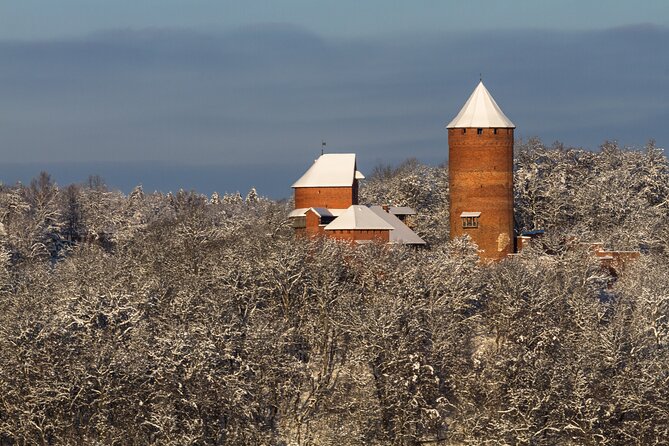
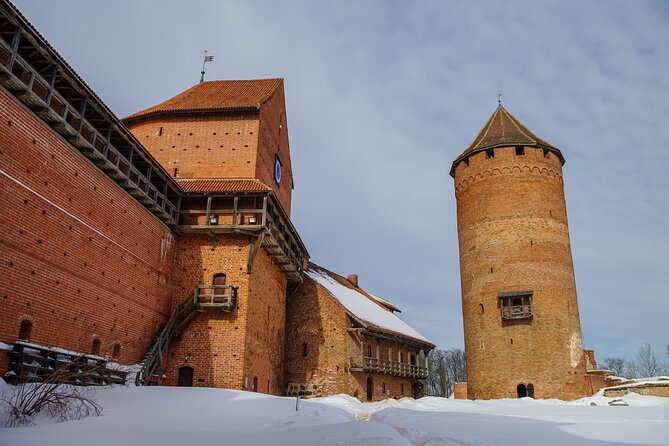
Turaida Castle is the centerpiece of the excursion. Construction began in 1214 under Archbishop Albert of Riga, on the site of a wooden fortress belonging to Liv leader Kaupo. The castle was first called Fredeland before the name Turaida became established.
Over time, towers, defensive walls, and household buildings expanded the complex. A fire in 1776 left the castle in ruins, but archaeological work and restoration began again in 1976. The site now forms part of the Turaida Museum Reserve, with exhibitions on the castle, its rulers, and the Gauja Livs.
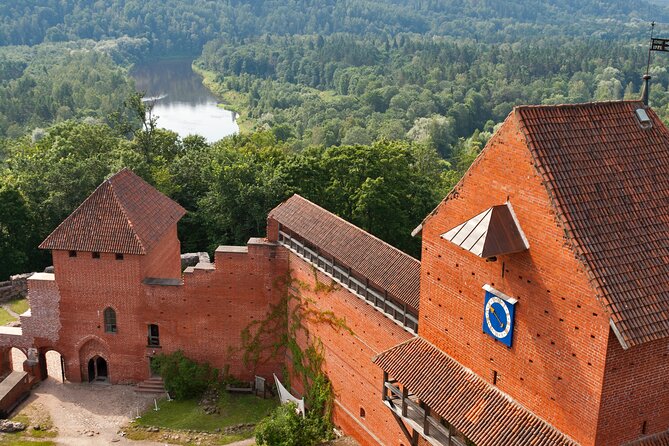
The included admission and one-hour visit let you explore the main areas without paying a second entrance fee. The main tower is especially important. From above, you can look over the Gauja Valley and understand why this position mattered for defense and settlement.
Turaida is more restored than Sigulda’s Livonian Order Castle, so it gives you a clearer picture of medieval architecture. At the same time, restoration can make parts of the experience feel more formal and museum-like. I would use Sigulda for atmosphere and Turaida for historical structure and interpretation.
The castle also gives the day an important local angle. The story is not only about German religious orders and archbishops. The site began with Kaupo’s wooden fortress, and the museum displays help explain the Gauja Livs who lived in the region.
The 1750 wooden church and local life
The tour summary also includes a wooden church built in 1750. This is a small detail, but it helps broaden the day beyond military architecture.
A wooden church tells you something about local building traditions and daily religious life. It also provides a useful counterpoint to the stone towers and defensive walls at Turaida. The supplied schedule does not give the church a separate time allocation or describe the interior, so you should expect it to be part of the wider Turaida visit rather than a long standalone tour.
This is a good example of why a guide adds value. Without context, a short stop at an old wooden building can pass quickly. With an explanation of when and why it was built, the church becomes part of the social story of the area.
Food, timing, and the practical side of the day
Food and drinks are not included in the $139 price. You will have options for traditional Latvian and modern cuisine during the excursion, but the exact restaurant and meal arrangement are not specified. Ask your guide about the day’s meal timing so you know when to plan for lunch.
The 9:00 a.m. start at Herdera laukums 6 in central Riga is straightforward. The tour ends back at that same meeting point, which makes it easier to plan an evening meal or another Riga activity.
Confirmation arrives at booking, and mobile tickets are available. The tour operates near public transportation, though the main sightseeing itself is handled by private transport. All taxes, museum entrances, and transportation are included.
The tour requires a minimum number of participants. If that number is not reached and the outing is canceled, you can receive a full refund or choose another date or experience. You can also cancel for a full refund up to 24 hours before the start time. Changes or cancellations inside that 24-hour window are not refunded.
Most people can take part, according to the supplied details. Still, the castle towers, viewpoints, and old sites may include uneven surfaces or stairs. If stairs are difficult for you, ask the provider for more detail before booking.
Who will get the most from this tour
I would recommend this outing to you if you want a guided introduction to Gauja National Park and prefer not to coordinate buses, taxis, and separate admissions. It works especially well for first-time visitors to Latvia who want a day that combines nature, architecture, and stories.
It should also suit families and mixed-age groups because the schedule changes focus often. A cave, castle ruins, a sporting track, a viewpoint, and a restored fortress give you several kinds of interest across one day.
History fans will appreciate the Livonian Order, Archbishop Albert, Kaupo, and the restoration work at Turaida. You will also enjoy the day if folklore matters as much to you as dates and building styles.
I would hesitate to recommend it if your ideal outing means lingering for hours at one site. The schedule includes about 25 minutes at the viewpoints, 20 minutes at Sigulda New Castle, 30 minutes at Gutmanis Cave, and about an hour at each major castle. That is enough for a strong overview, not a slow archaeological study.
Should you book the Sigulda and Turaida tour?
Book it if you want an efficient day outside Riga with transport, guide service, and museum entry handled together. The strongest reasons are the Gauja Valley views, the two contrasting castles, Gutmanis Cave’s inscriptions and legends, and the small maximum group size.
At $139, the value depends on how much you would pay for convenience. Add transport, admissions, and a guide to a self-planned day, and the price becomes easier to justify. Just remember that meals are extra and the schedule moves at a steady pace.
If you want Latvia’s countryside, medieval sites, and local stories in one day, this is a sound choice. If you want a flexible day with long stops and no fixed route, choose an independent visit instead.
FAQ
How long does the Sigulda and Turaida tour last?
The experience lasts approximately six to seven hours.
Where does the tour start?
It starts at 9:00 a.m. at Herdera laukums 6, Centra rajons, Riga, LV-1050, Latvia.
Where does the tour end?
The tour ends back at the starting meeting point in Riga.
What is included in the price?
Private transportation, all taxes and fees, and museum entrances are included.
Are food and drinks included?
No. Food and drinks are not included, although traditional Latvian and modern dining options are available during the day.
How many people can join the group?
The activity has a maximum of 17 participants.
Can I cancel for a full refund?
Yes. You must cancel at least 24 hours before the experience start time to receive a full refund. Cancellations within 24 hours are not refunded.
Just added in Riga
- Ultimate Art Nouveau Experience in Riga – Private Tour★ 5.0 · 4 reviews
- Vilnius Day Trip or Airport Transfer★ 5.0 · 2 reviews
- Private Transfer to anywhere in Riga Center★ 5.0 · 2 reviews
- Tour from Riga to Vilnius: Bauska Castle, Rundale Palace and The Hill of Crosses★ 5.0 · 3 reviews
- Tiffany Technique Workshop★ 5.0 · 1 review
- Sea Resort Jurmala near Riga Private Tour★ 5.0 · 1 review
- Explore the Instaworthy Spots of Riga with a Local★ 5.0 · 1 review
- The tour of Riga – one step outside the Old Town★ 5.0 · 1 review
Gauja National Park Sigulda and Turaida, compared.
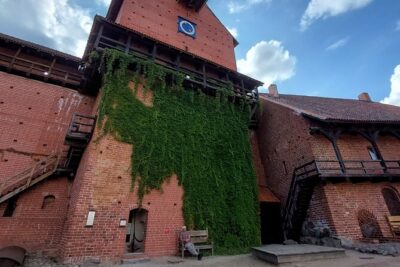
Private Full-Day Trip to Turaida, Sigulda, and Cesis
Read our review →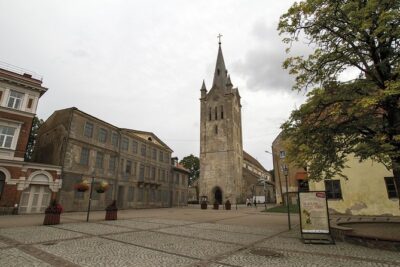
Full-Day Private Trip to Cesis, Sigulda and Turaida from Riga
Read our review →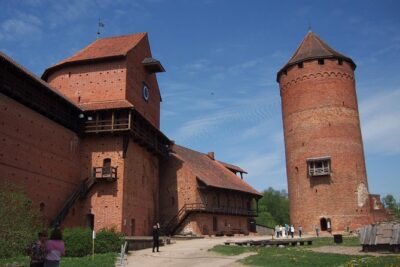
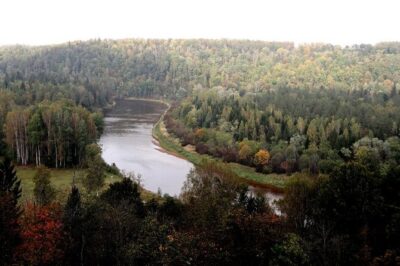
Hike In Gauja National Park – Up And Down The Switzerland Of Latvia
Read our review →
Discover Best Of Gauja National Park In One Day
Read our review →
Day trip to Gauja National Park: animals, castles and a cave
Read our review →Browse the lists this tour appears in