
Review · HISTORICAL TOURS
Riga Jewish History Tour
History is close to the pavement in Riga. This private tour links the city’s elegant Art Nouveau streets with former Jewish neighborhoods, Holocaust memorials, a museum, and the surviving Peitavas Street Synagogue. I like the private format, which gives you room to ask questions and spend longer at places that matter to you. I also like the way the tour connects Jewish life, refugee history, architecture, and wartime destruction rather than treating the Holocaust as an isolated chapter. The main consideration is its somber subject matter, especially at Rumbula Forest and the Great Choral Synagogue Memorial.
At $96.33 per person, the price is easiest to justify for a small private group that values a guide’s time and private transportation. The schedule runs about three to four hours, although Armands has extended the tour when the group wanted more time. You will also pay donations at the synagogue and museum, including €5 per person for the Riga Holocaust Museum.
In This Review
- Key points to know before you book
- Why this private tour works well in Riga
- Art Nouveau Riga and the Jewish life behind the façades
- Latgale Suburb and the former ghetto
- The Great Choral Synagogue Memorial
- Rumbula Forest, where the scale becomes impossible to ignore
- The Riga Ghetto and Latvian Holocaust Museum
- Peitavas Street Synagogue and living Jewish culture
- Armands and the value of a private guide
- Timing, pickup, and extra costs
- Who will appreciate this tour most?
- Should you book the Riga Jewish History Tour?
- FAQ
- How long does the Riga Jewish History Tour last?
- What time does the tour start?
- Is hotel pickup available?
- Is this a private tour?
- What language is the tour offered in?
- Is transportation included?
- Are admission tickets included?
- How much is the museum donation?
- Is there a dress requirement for the synagogue?
- Can I cancel for a refund?
Key points to know before you book
- Mikhail Eisenstein’s Art Nouveau buildings bring Jewish cultural history into one of Riga’s prettiest districts.
- Rumbula Forest is the emotional center of the tour, marking the murder of more than 25,000 people in 1941.
- Private transportation saves time between scattered sites, especially the forest memorial and city neighborhoods.
- Armands is flexible and candid, answering questions carefully and admitting when he does not know something.
- Saturday visits need planning, since some Jewish sites may be closed for Shabbat.
- The synagogue and museum require donations, so budget a little extra beyond the tour price.
Why this private tour works well in Riga
Riga’s Jewish story is spread across the city. You do not get it all by walking through one museum or visiting one synagogue. This tour uses a car and a private guide to connect places that are separated by city streets and woodland.
That arrangement matters. You begin with architecture and Jewish achievement, then move toward the former ghetto and sites of mass murder. The route gives you a fuller picture of Jewish life before the Holocaust, the arrival of refugees, the destruction of Riga’s Jewish community, and the effort to remember what happened.
I especially value the private setting for a subject like this. You can ask about family connections, local history, religious customs, or difficult points without worrying about a large group. The guide can also adjust the pace. One group spent longer at several sites and received extra time instead of being hurried back to the planned schedule.
The tour is offered in English and includes private transportation and guide services. Pickup is available, but you need to wait outside your hotel or apartment. Cars cannot park in Old Riga, so the pickup arrangement may require a short walk to a suitable spot.
More history tours in Riga:
- Visit of Salaspils Memorial Ensemble
★ 5.0 · 10 reviews - Private Day Tour to Sigulda, Turaida Castle and Soviet Bunker
★ 4.5 · 8 reviews - Private Soviet Riga tour
★ 5.0 · 8 reviews
Art Nouveau Riga and the Jewish life behind the façades
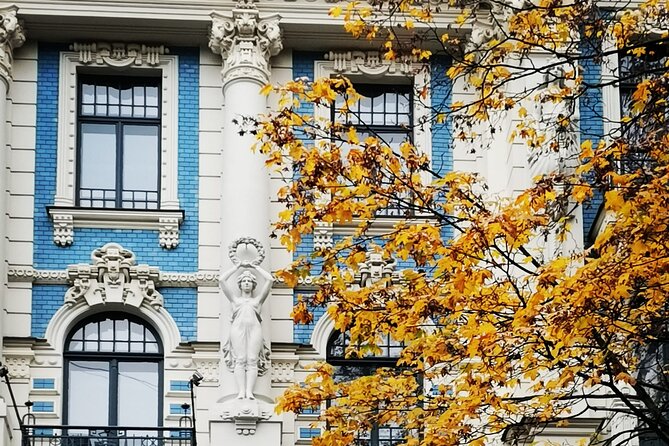
The first stop lasts about 30 minutes and looks at Riga’s famous Art Nouveau architecture through a Jewish lens. Several striking buildings in this district were designed by Mikhail Eisenstein, a Jewish architect whose work helps connect the city’s artistic identity with its Jewish past.
One building also has a personal connection to philosopher Isaiah Berlin, who was born there. That detail gives the neighborhood more weight than a simple photo stop. You can look up at the elaborate façades while learning about the people and ideas connected with them.
No admission ticket is required. The appeal here is the added explanation. On your own, you might admire the decorative buildings and move on. With the guide, you gain a reason to notice who designed them and how Jewish residents contributed to Riga’s cultural life.
This is also a useful opening because it begins with accomplishment and ordinary city life, not only persecution. That balance matters. Jewish history in Riga did not begin with the German occupation, and the tour makes that clear from the start.
Latgale Suburb and the former ghetto
The route then moves to Latgale Suburb, the former territory of the Riga Jewish Ghetto. The visit lasts around 30 minutes and focuses on the physical setting of the ghetto, where many buildings remain in much the same condition as they were around 80 years ago.
This is one of the tour’s most useful ideas: the past is not confined to a polished memorial. Streets and buildings can show how people lived, suffered, and were confined. The neighborhood helps you picture the scale and texture of wartime Riga in a way that a plaque alone cannot.
Do not expect a restored historical district or a large attraction at this stop. Its value comes from context and observation. You may find the buildings plain, worn, or difficult to interpret without the guide. That is precisely why the private format helps. Armands can explain what you are seeing and answer questions about the ghetto’s place in the city.
The stop also prepares you for the more direct memorials later in the morning. The tour moves from the city people built to the places where that community was destroyed.
The Great Choral Synagogue Memorial
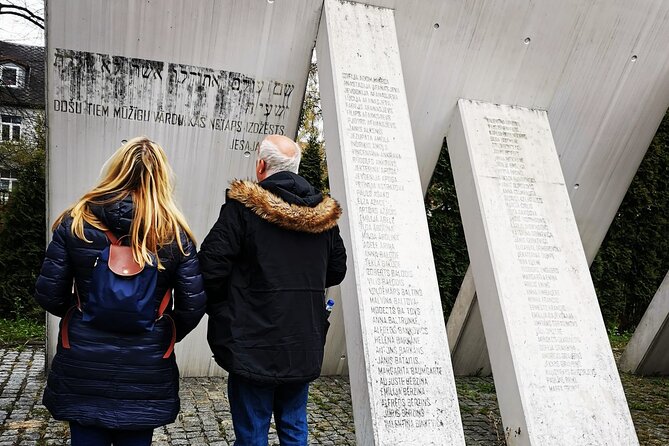
The memorial to the Great Choral Synagogue is a short, 15-minute stop, but its history is severe. On July 4, 1941, more than 300 Jewish refugees from Lithuania and local Latvian Jews were forced into the synagogue basement. The building was then deliberately burned.
The present memorial marks the site. You will not be visiting a functioning synagogue here. Instead, the stop asks you to pause at a place where Jewish refugees and local Jews were killed together at the beginning of the occupation.
The brief time allocation is appropriate to the site. There is no need to rush through a long exhibit, but you will want a guide who can explain the event clearly and respectfully. The tour’s tone is described as tactful and respectful, which is important at a memorial where the facts are already hard enough.
I would treat this as a quiet stop. It is not a place for casual sightseeing, and the emotional shift from Art Nouveau architecture to wartime murder is sharp. That contrast is part of the tour’s purpose.
A completely different kind of day out:
- Riga Old Town walking tour
★ 4.5 · 304 reviews - Latvian food tasting tour at Riga Central market
★ 4.5 · 241 reviews - 2 countries! Hill of Crosses, Rundale Palace and Bauska castle
★ 5.0 · 225 reviews - Discover Riga Bike Tour
★ 5.0 · 166 reviews
Rumbula Forest, where the scale becomes impossible to ignore
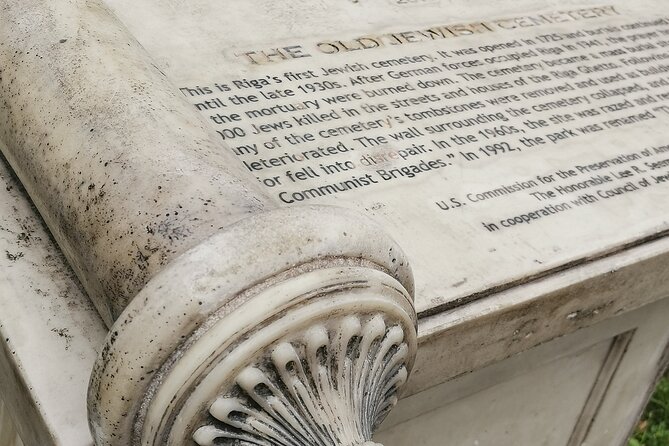
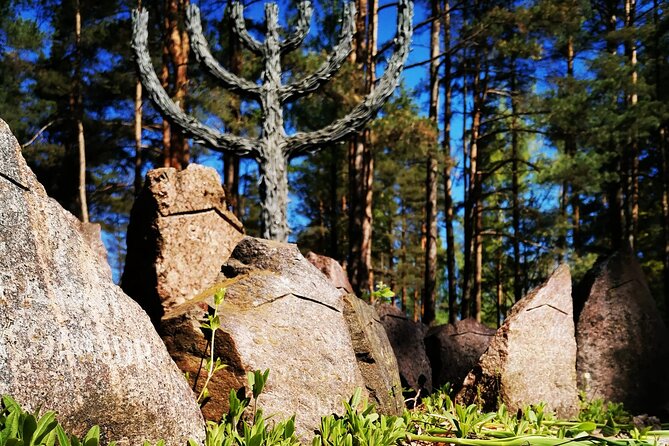
The longest stop is Rumbula Forest, with about one hour set aside. In November and December 1941, Nazi authorities carried out the mass murder of Jewish prisoners from the Riga Ghetto. More than 25,000 people were killed during the actions on November 30 and December 8, including about 1,000 Jews deported from Germany.
A memorial was opened on November 29, 2002. The forest setting changes the experience. After seeing city streets and buildings, you enter a place connected directly with mass killing. The quiet setting can make the numbers feel even more difficult to grasp.
This is the part of the tour where time matters most. An hour allows you to walk around the memorial, read, reflect, and ask questions without being pushed along. The tour is not entertainment, and you should expect a serious mood here.
I also think private transportation is especially useful for Rumbula Forest. The site is outside the central sightseeing area, and reaching it independently would require more planning than the central stops. Here, the car lets you focus on the memorial instead of working out the route.
The forest may be too heavy for some people, particularly if you are already visiting several Holocaust sites during your trip. For others, it will be the most important part of the morning. Be honest with yourself about the kind of experience you want.
The Riga Ghetto and Latvian Holocaust Museum
The Museum of Riga Ghetto and Holocaust in Latvia adds an indoor setting after the forest. The museum covers the Riga Ghetto, the Holocaust in Latvia, and Jewish life before the Holocaust. That last subject is important because it keeps the community from being reduced to its destruction.
The visit is planned for about 30 minutes. You will need to donate €5 per person, which is not included in the tour price. Bring a little extra cash or confirm the preferred payment method before setting out if that matters to you.
You may want more than 30 minutes here, depending on your interest in the displays. The guide can provide a broad framework, but the museum gives you the chance to look at material at your own speed. One visitor purchased a book at the museum, which could be useful if you want to continue learning after the tour.
The museum also helps tie together the earlier stops. The former ghetto is no longer only a set of old buildings. Rumbula is no longer only a forest memorial. Together, the sites show how daily life, forced confinement, and mass murder were connected.
Peitavas Street Synagogue and living Jewish culture
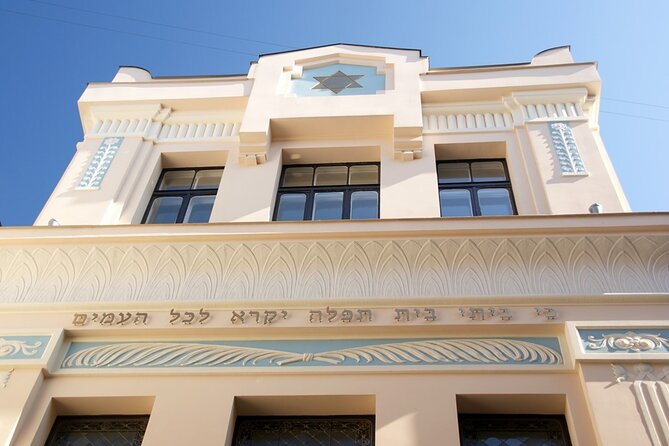
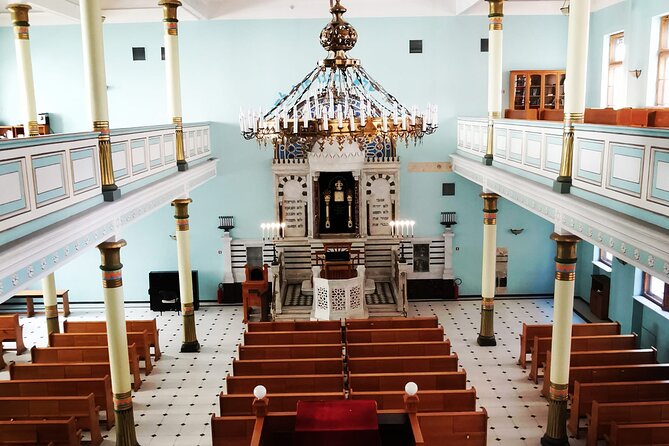
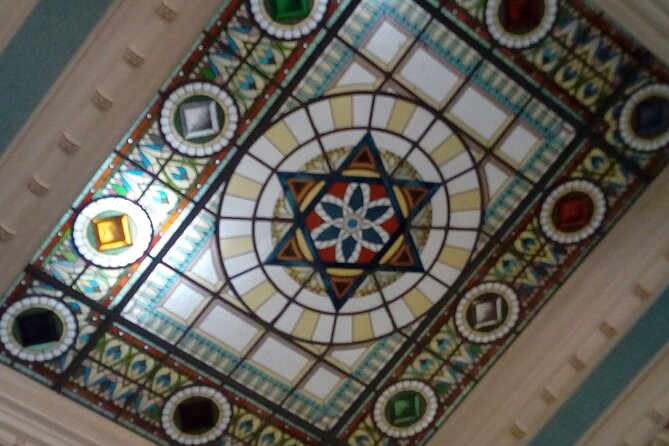
The final stop is Riga’s synagogue on Peitavas Street, with about 45 minutes planned. Built between 1903 and 1905, it was designed in the Art Nouveau style with Ancient Egyptian motifs. That makes it both a place of worship and an important cultural building.
The synagogue gives the tour a necessary present-day note. After visiting memorials and sites of destruction, you see a living Jewish institution in Riga. The building’s design also returns you to the Art Nouveau theme from the beginning of the tour, but now in a religious setting.
A donation is required at the synagogue and is not included in the tour price. Visitors who do not have their heads covered will be provided with a kipa. The stated dress guidance is simple: ordinary clothing is fine, but you should not enter naked. In practical terms, respectful behavior matters more than dressing formally.
Saturday can affect the schedule. The synagogue and other places may be closed for Shabbat, and Armands has adjusted the route on a Saturday by taking the group to another place of interest. If your only available day is Saturday, ask about the plan before booking.
Armands and the value of a private guide
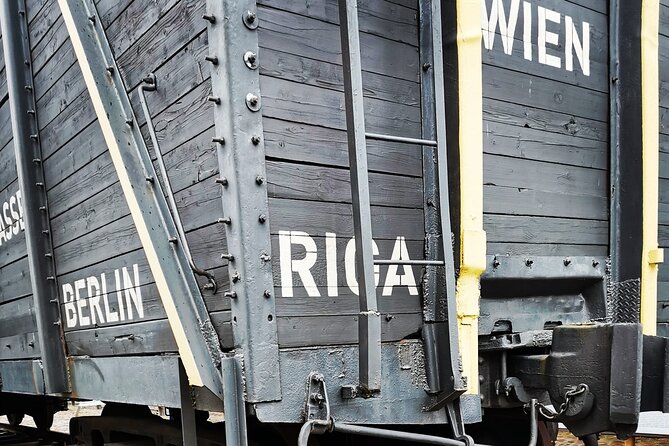
The guide’s role is the main reason to choose this tour over a self-guided route. Armands is repeatedly described as friendly, courteous, flexible, and well informed. He drove groups to the main sites, explained the history in detail, answered questions, and allowed time for personal exploration.
One useful quality is his honesty. If he does not know an answer, he says so rather than filling the silence with guesswork. That is a small point, but it builds trust on a tour dealing with complex history.
The private format also means your group is the only group participating. You can ask as many questions as you like, request more time at a memorial, or make room for an extra place of interest if the schedule allows. Armands has even gone beyond the planned duration when groups spent longer at stops.
The name appears once in a slightly different form, Armando, but the guide is otherwise identified as Armands by the provider and in several comments. If you want to confirm who will lead your tour, you can do so when booking.
Timing, pickup, and extra costs
The advertised start time is 9:00 am, with the full experience taking about three to four hours. That is a sensible length for six stops, but do not treat the schedule as rigid. Memorials and museums can prompt questions, and the guide may extend the visit when time permits.
Pickup is offered from your hotel or apartment. In Old Riga, the vehicle cannot park, so you must wait outside at a suitable pickup point. This is a small but important detail. Arrange where to meet before the morning begins, especially if your accommodation is on a pedestrian street.
The $96.33 price includes private transportation and guide services. It does not include the synagogue donation or the €5 museum donation. For a solo visitor, the cost is fairly high. For two or more people sharing a private tour, the value improves because you are paying for the vehicle, the guide’s time, and a tailored pace rather than a seat on a large bus.
Group discounts are offered, which may make the price more attractive for families or friends. The tour also provides a mobile ticket and confirmation at booking, keeping the practical side straightforward.
Free cancellation is available until 24 hours before the local start time. Changes or cancellations inside that window are not accepted for a refund.
Who will appreciate this tour most?
I would recommend this experience to anyone with a serious interest in Jewish life in Latvia, Holocaust history, refugee history, or Riga’s Art Nouveau architecture. It suits visitors who want explanation and conversation, not simply a checklist of monuments.
It is also a good fit if you have limited time in Riga. The private car links central sites with Rumbula Forest and removes much of the transport planning. You can cover a great deal in one morning while still having time to pause.
Families and private groups may appreciate the adjustable pace. The subject matter is difficult, so younger participants should be prepared for direct discussion of murder and persecution. The tour is not designed as light sightseeing.
You may want to skip it if you are looking only for cheerful architecture walks, or if Holocaust memorial visits would feel too intense during your trip. The Art Nouveau opening and synagogue visit provide cultural balance, but the heart of the experience remains the Holocaust.
Should you book the Riga Jewish History Tour?
Book it if you want Riga’s Jewish story explained through real places rather than a few isolated facts. The strongest features are the private guide, the efficient transportation, the time allowed at memorials, and the connection between Jewish achievement, refugee movement, ghetto life, and genocide.
Before paying, account for the two donations and check the Saturday schedule if needed. I would also leave some flexibility in your day, since the tour may run longer when a site or conversation deserves more time.
For a private group seeking a thoughtful and direct introduction to Jewish Riga, this is a strong choice. It is not an easy morning, but it is purposeful, respectful, and unusually useful for understanding how the city’s past remains visible today.
FAQ
How long does the Riga Jewish History Tour last?
The tour lasts approximately three to four hours.
What time does the tour start?
The stated start time is 9:00 am.
Is hotel pickup available?
Yes. Pickup is offered from outside your hotel or apartment. Vehicles cannot park in Old Riga, so you need to wait outside at the arranged meeting point.
Is this a private tour?
Yes. Only your group participates in the activity.
What language is the tour offered in?
The tour is offered in English.
Is transportation included?
Yes. Private transportation and guide services are included.
Are admission tickets included?
The listed stops have no admission ticket charge, but donations are required at the synagogue and the Riga Holocaust Museum.
How much is the museum donation?
The donation to the Riga Holocaust Museum is €5 per person.
Is there a dress requirement for the synagogue?
Ordinary clothing is acceptable. A kipa is provided if your head is not already covered by a cap, hat, scarf, or similar covering.
Can I cancel for a refund?
Yes. You can cancel at least 24 hours before the start time for a full refund. Cancellations or changes made less than 24 hours before the start time are not refunded or accepted.
Just added in Riga
- Vilnius Day Trip or Airport Transfer★ 5.0 · 2 reviews
- Ultimate Art Nouveau Experience in Riga – Private Tour★ 5.0 · 4 reviews
- Private Transfer to anywhere in Riga Center★ 5.0 · 2 reviews
- Tour from Riga to Vilnius: Bauska Castle, Rundale Palace and The Hill of Crosses★ 5.0 · 3 reviews
- Tiffany Technique Workshop★ 5.0 · 1 review
- Sea Resort Jurmala near Riga Private Tour★ 5.0 · 1 review
- Explore the Instaworthy Spots of Riga with a Local★ 5.0 · 1 review
- The tour of Riga – one step outside the Old Town★ 5.0 · 1 review
Historical Tours, compared.
All Inclusive Honest History Tour – Āraiši, Cēsis, Līgatne, Sigulda
Read our review →
Riga’s Architecture: A self-guided audio tour of the city’s art nouveau history
Read our review →Browse the lists this tour appears in